
The US SEC's move towards Coinbase illustrates the regulatory gap in the cryptocurrency space.


Original Article Title: SEC's Coinbase Move Signals Regulatory Vacuum for Crypto
Original Article Author: Yueqi Yang, The Information
Original Article Translation: Block unicorn
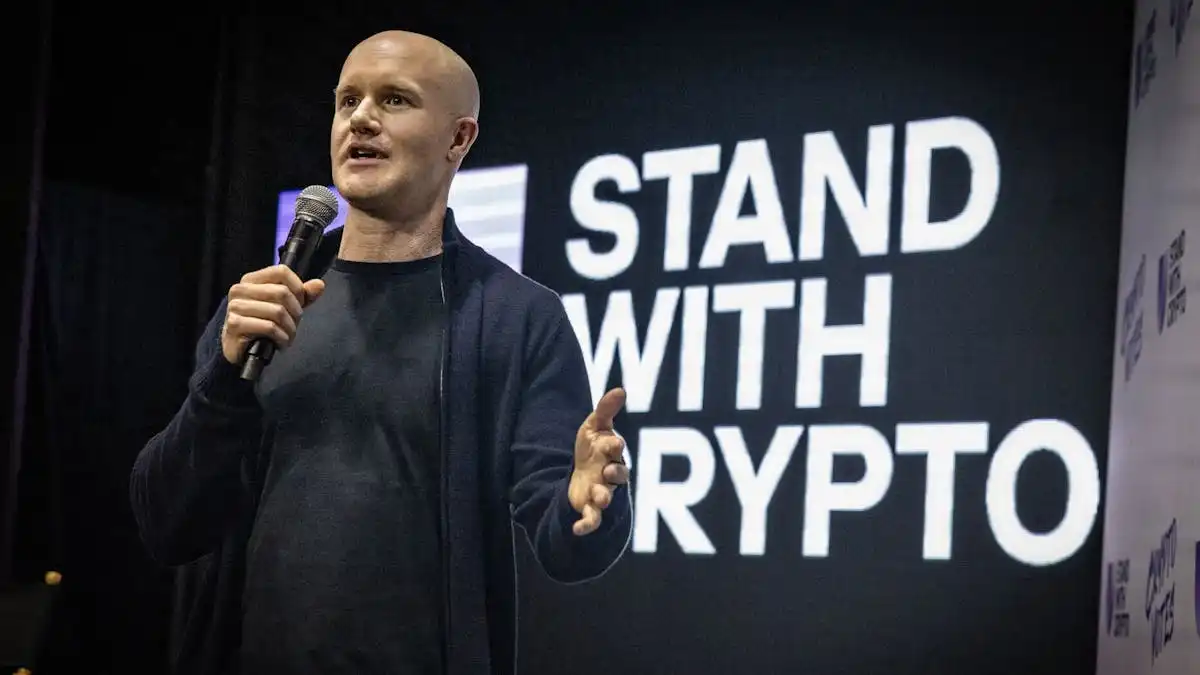
Welcome to the official beginning of the cryptocurrency regulatory vacuum. This is where we find ourselves now as Coinbase, the United States' largest cryptocurrency exchange, has indicated it has reached an agreement with the Securities and Exchange Commission (SEC) staff to dismiss the lawsuit alleging the company operated an unregistered securities exchange (at least that's what Coinbase is saying—we'll have to wait for confirmation from the SEC after a commission vote).
Last Friday morning US time, Coinbase's stock rose 2.2%. This news marked a significant development for the cryptocurrency industry in terms of regulatory progress, especially as the SEC's decision to drop its long-running lawsuit against Coinbase seemed to usher in a regulatory vacuum for the cryptocurrency industry. Coinbase CEO Brian Armstrong stated in a post on X that the dismissal means Coinbase will not pay any fines, will not have to make any changes to its operations, and added that the company has spent around $50 million litigating the case.
It appears that a top financial regulatory agency is pausing the enforcement of decade-old securities rules related to cryptocurrency as it awaits new rules to be set by Congress—if Congress can pass any rules at all. And these congressional deliberations are likely to take some time. Essentially, cryptocurrency companies have been promised regulatory exemptions while Trump's cryptocurrency task force tries to figure out the industry's next steps.
While all of this may sound optimistic for the cryptocurrency industry, things are not all sunshine and rainbows. Today we have seen some reminders of the risks facing the cryptocurrency space: just two hours after Coinbase shared its good news, Bybit, the world's third-largest cryptocurrency exchange, confirmed it had been hit by a hack of over $1 billion, making it the largest hack in cryptocurrency history.
During such hacks, panicked investors may mass withdraw their funds, and if an exchange doesn't have enough funds to cover withdrawal requests, it could deal a fatal blow to the exchange. Currently, Bybit CEO Ben Zhou has stated that the exchange holds enough funds to cover the hacked amount and is still processing withdrawals normally. Nevertheless, both Bitcoin and Ethereum prices have subsequently dropped, and while Coinbase's stock initially rose after news of the SEC's action in the morning, it fell by 8% in afternoon trading.
This situation may take days or even weeks to clarify before any chain reaction becomes apparent. This hack not only exposed the inherent risks of cryptocurrency but also demonstrated that traditional financial institutions' current security measures can protect them from cryptocurrency risks. For those still under the strict scrutiny of the SEC and federal banking regulators, such as banks and traditional stock exchanges, this is somewhat reassuring.
These companies have long argued that the cryptocurrency industry currently has an unfair advantage in terms of regulation. For example, Nasdaq complained earlier this month during a meeting with a task force, requesting the SEC to set a clear deadline for the "hands-off" status of cryptocurrency exchanges. The exchange giant had previously expressed its desire to launch cryptocurrency operations. Banks also hope to offer cryptocurrency services to institutional traders and investors, possibly to prevent losing clients interested in cryptocurrency to cryptocurrency exchanges and trading firms. However, they still need approval from banking regulators to do so.
This week, a heavyweight alliance composed of banking lobby groups requested the Trump administration to find a way to ensure they do not miss out on this game. This series of events not only highlights the vulnerability of the cryptocurrency industry but also reflects the advantage of traditional financial institutions in terms of regulation and protection measures. As the cryptocurrency market continues to evolve and the regulatory environment gradually takes shape, how to balance innovation and risk in the future remains a question worth pondering.
You may also like

Mastercard Launches Agent Pay for AI, Plans to Record AI Agent Payment Authorizations on Polygon
Mastercard launched Agent Pay for AI, a new payment protocol designed to help AI agents make small payments such as pay-per-use access to data and APIs. The system plans to record human-granted AI agent permissions on Polygon, focusing on verifiable authorization, identity, and payment controls.

Curve Deploys Llamalend v2 on Optimism With 250,000 OP Incentives
Curve launched Llamalend v2 on Optimism with 250,000 OP incentives from the Optimism Foundation. The upgrade expands Llamalend beyond its earlier crvUSD-focused model, adding broader collateral support, LlamaRisk market reviews, and the ability to use Curve LP tokens as collateral.

Raydium Old Liquidity Pool Reportedly Exploited, With $1.34 Million Moved to Ethereum and Tornado Cash
An old Raydium liquidity pool was reportedly exploited for around $1.34 million in USDC, RAY, and wSOL, with the stolen funds bridged to Ethereum and deposited into Tornado Cash. The incident highlights the tail risks of legacy DeFi pools, old contracts, and cross-chain fund laundering paths.

Kalshi Executive Challenges “SBF Backed AI Unicorns” Narrative, Says Leopold Aschenbrenner Was Key Figure
Kalshi executive John Wang questioned the “SBF backed AI unicorns” narrative, saying Leopold Aschenbrenner was the key figure behind major AI investment decisions.

Pantera Capital Partner: How Tokenization is Restructuring the Private Equity and Early Investment Ecosystem?

New York Proposes Stricter Stablecoin Issuer Rules Aligned With Federal GENIUS Act
NYDFS proposed stricter stablecoin issuer rules aligned with the GENIUS Act, covering reserves, custody, redemption timelines, audits, and capital buffers.
Every exchange is a "Universal Exchange."

The counterattack of traditional finance: Alliance chains are quietly reviving

CryptoQuant Says Bitcoin Profitable Supply Is Near 45% Pressure Zone as On-Chain Data Points to Market Repricing
CryptoQuant said Bitcoin’s profitable supply is nearing the 45% pressure zone, signaling rising market stress, unrealized losses, and a possible on-chain repricing phase.

Bitcoin Falls Below 200-Week Moving Average as On-Chain Data Shows Over Half of Supply in Loss
Bitcoin dropped below its 200-week moving average as on-chain data showed over 50% of circulating supply is now in loss, signaling rising market stress.

CFTC Reportedly Plans New Prediction Market Rules Focused on Manipulation Risk and Public Interest Review
The CFTC is reportedly preparing new prediction market rules focused on manipulation risk, public interest review, and retail trader protections.

Meet the new WEEX trial fund—your gateway to greater profits

WEEX Labs Lands at Dutch Blockchain Week: A Disruptive Crypto × AI Conversation Sets Sail in Amsterdam
SK Hynix Reportedly Plans U.S. ADR Listing as Early as August, With SEC Approval Possible in Late June
SK Hynix may pursue a U.S. ADR listing as early as August, with SEC approval reportedly possible in late June amid strong AI chip supply chain demand.

SpaceX vs Tesla vs xAI: Which Elon Musk Trade Has the Biggest Upside in 2026?
OpenAI Reveals It Has Confidentially Submitted an S-1 to the SEC, Keeping the Door Open for a Future IPO
On June 9, according to an OpenAI announcement, the company recently confidentially submitted a draft S-1 registration statement to the U.S. Securities and Exchange Commission (SEC), beginning the preliminary compliance process for a potential initial public offering. OpenAI said it chose to disclose this proactively because it expected the news might leak; however, the company has not yet set a specific listing timeline, and related arrangements may still take some time.
Latest research from 13 top universities including Cornell University: The current state, challenges, and misconceptions of the fusion of Crypto and AI
Deconstructing Anthropic: The Best AI Company, Possibly Also a Type of Organizational Invention
Mastercard Launches Agent Pay for AI, Plans to Record AI Agent Payment Authorizations on Polygon
Mastercard launched Agent Pay for AI, a new payment protocol designed to help AI agents make small payments such as pay-per-use access to data and APIs. The system plans to record human-granted AI agent permissions on Polygon, focusing on verifiable authorization, identity, and payment controls.
Curve Deploys Llamalend v2 on Optimism With 250,000 OP Incentives
Curve launched Llamalend v2 on Optimism with 250,000 OP incentives from the Optimism Foundation. The upgrade expands Llamalend beyond its earlier crvUSD-focused model, adding broader collateral support, LlamaRisk market reviews, and the ability to use Curve LP tokens as collateral.
Raydium Old Liquidity Pool Reportedly Exploited, With $1.34 Million Moved to Ethereum and Tornado Cash
An old Raydium liquidity pool was reportedly exploited for around $1.34 million in USDC, RAY, and wSOL, with the stolen funds bridged to Ethereum and deposited into Tornado Cash. The incident highlights the tail risks of legacy DeFi pools, old contracts, and cross-chain fund laundering paths.
Kalshi Executive Challenges “SBF Backed AI Unicorns” Narrative, Says Leopold Aschenbrenner Was Key Figure
Kalshi executive John Wang questioned the “SBF backed AI unicorns” narrative, saying Leopold Aschenbrenner was the key figure behind major AI investment decisions.
Pantera Capital Partner: How Tokenization is Restructuring the Private Equity and Early Investment Ecosystem?
New York Proposes Stricter Stablecoin Issuer Rules Aligned With Federal GENIUS Act
NYDFS proposed stricter stablecoin issuer rules aligned with the GENIUS Act, covering reserves, custody, redemption timelines, audits, and capital buffers.


