
Glassnode: How Has the Landscape of Cryptocurrency Investors Shifted?


Original Title: A New Mindset
Original Source: Glassnode
Original Translation: Baishui, Golden Finance
Abstract
· Bitcoin has evolved into a global asset with high liquidity, available around the clock. This creates conditions for investors to speculate, trade, and express macroeconomic views when traditional markets are closed.
· Bitcoin continues to prove itself as an emerging store of value asset, with cumulative net inflows exceeding $850 billion. It also serves as a medium of exchange asset, processing nearly $9 billion in transactions daily.
· Several indicators of new demand remain high, but they are far below the peaks of previous cycles.
· The composition of digital asset investors is also changing, with a significant increase in more mature institutional investors in the Bitcoin space. This has led to a general decrease in drawdown magnitudes, with volatility compressing over time.
Test Ground
Since its inception in 2009, Bitcoin has evolved into a highly liquid global asset, remaining active for trading 24/7. Given that global events often occur outside traditional market trading hours, Bitcoin has become one of the few assets where investors can express views during weekends and similar times.
Over the weekend, Bitcoin experienced a sharp decline as market participants reacted to the Trump administration's tariffs on Mexico, Canada, and China. With other markets closed, Bitcoin and other digital assets saw a steep drop followed by a recovery:
· BTC's trading price fell from $104,000 to $93,000 (-10.5%) and then rebounded to $102,000.
· ETH's trading price fell from $34,000 to $25,000 (-26.5%) and then rebounded to $28,000.
· SOL's trading price fell from $236 to $184 (-22.0%) and then rebounded to $217.
Bitcoin is now playing an increasingly important role on the world stage, with nation-states like Bhutan engaging in large-scale mining operations, El Salvador pushing for Bitcoin as legal tender, and the U.S. government considering the potential of Bitcoin as a strategic reserve asset.
Bitcoin has recently surpassed the important psychological barrier of $100,000 for several weeks in a row, a feat many critics deemed impossible.
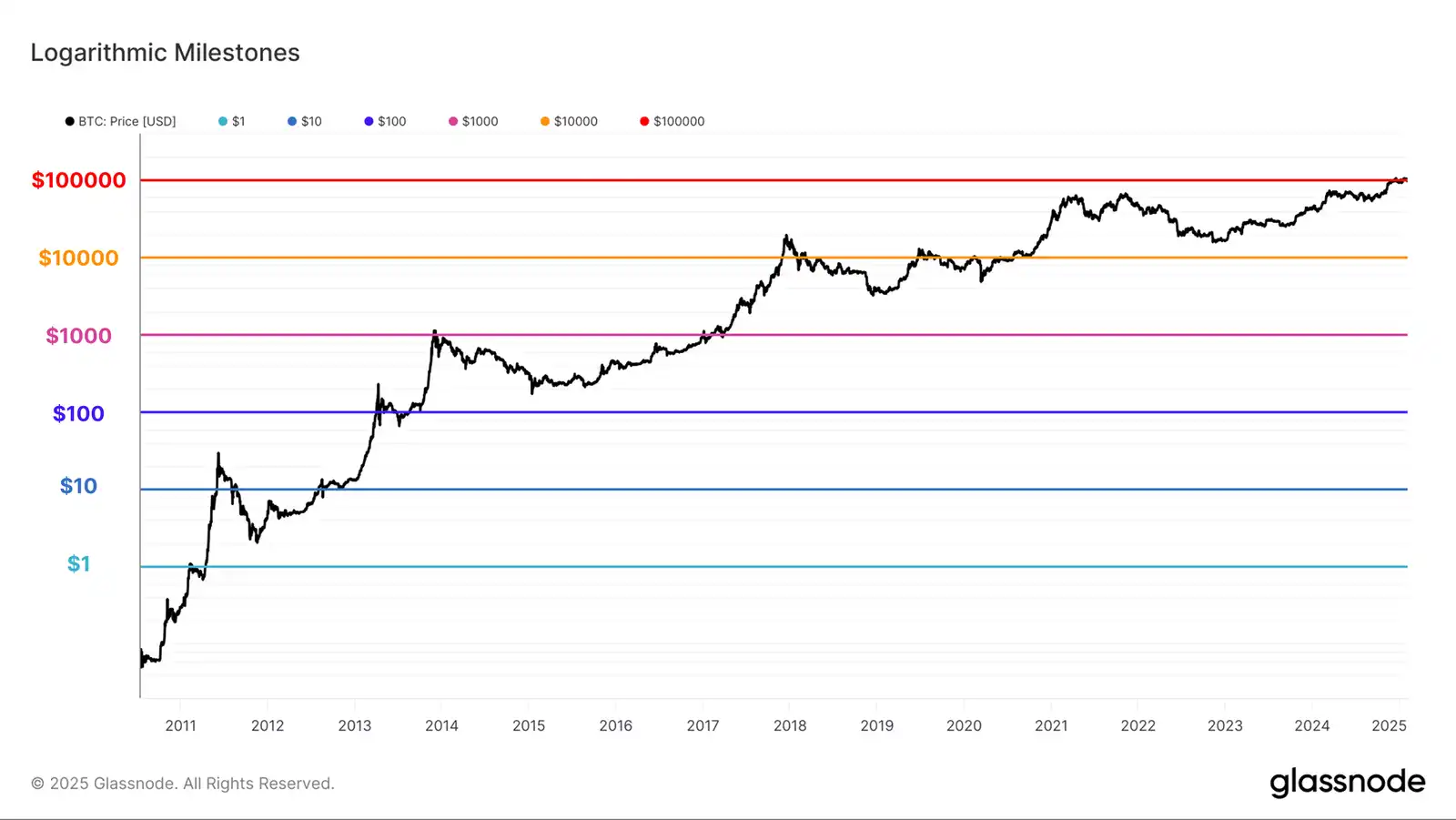
Despite traditional investors' increasing acceptance of Bitcoin, for many, Bitcoin remains a controversial and polarizing topic, often based on dubious claims of lacking intrinsic value or utility.
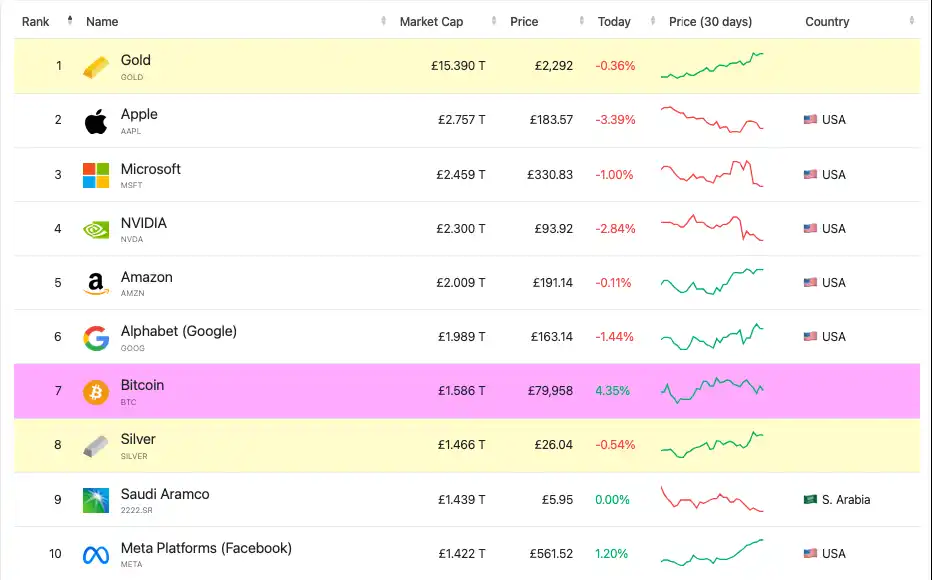
Nevertheless, Bitcoin has solidified its position as one of the world's largest assets, with a market capitalization of $2 trillion, ranking as the seventh-largest asset globally. It is worth noting that this places Bitcoin above silver ($1.8 trillion), Saudi Aramco ($1.8 trillion), and Meta ($1.7 trillion), making it increasingly hard to ignore.
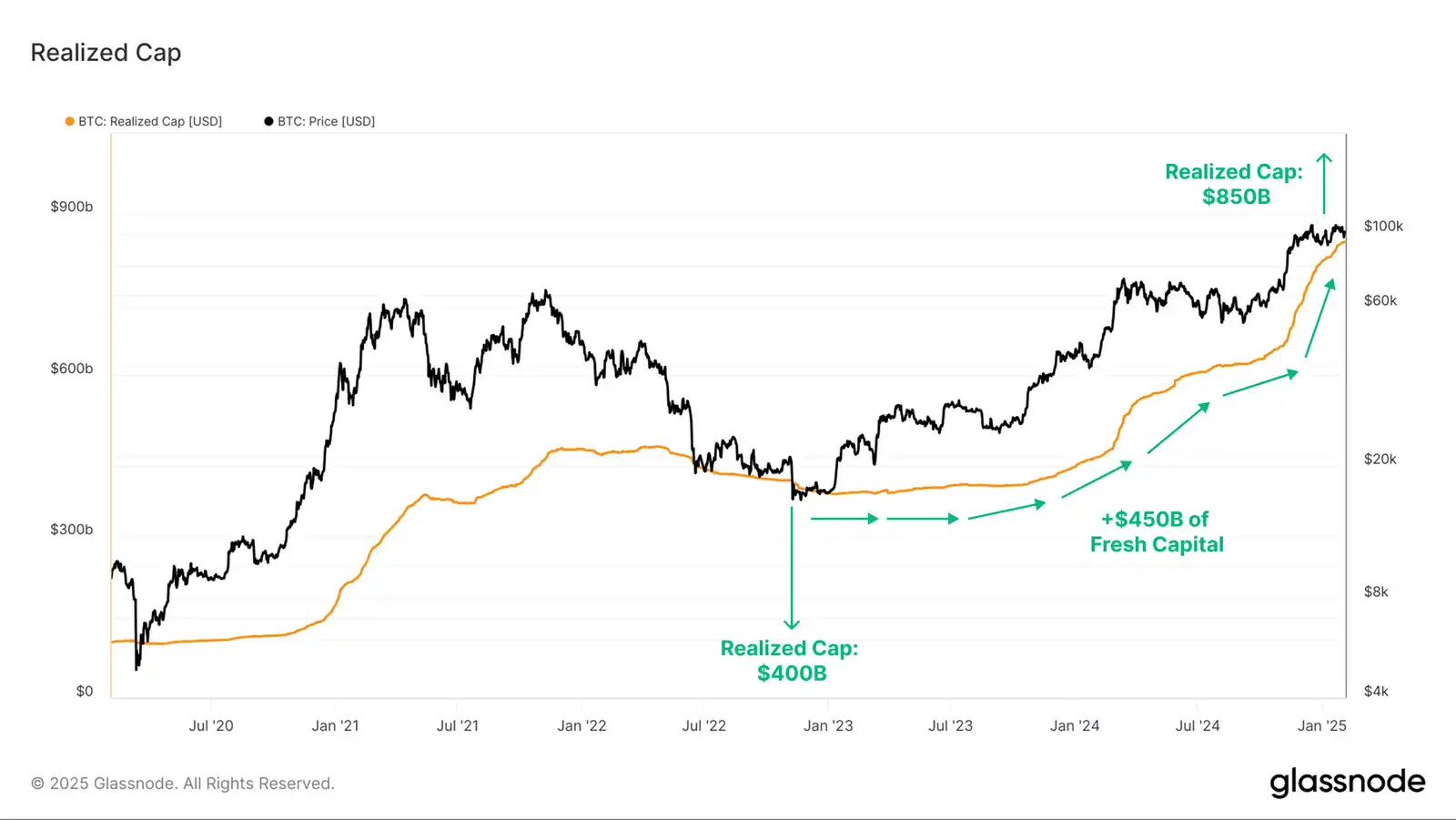
As the asset's valuation and weight reach such a significant scale, its inertia also increases. As a result, Bitcoin now requires a significant influx of new capital to sustain its market capitalization growth. To explore this idea, we can utilize the realized cap metric, which measures the cumulative net inflow of capital into a digital asset.
If we take the cycle low point set in November 2022 as a reference, when the realized cap was $400 billion, Bitcoin has since absorbed approximately +$450 billion of additional capital inflows, more than doubling its realized cap.
This reflects that the total value stored in Bitcoin is about $850 billion, with each token's pricing based on its last on-chain transaction price.
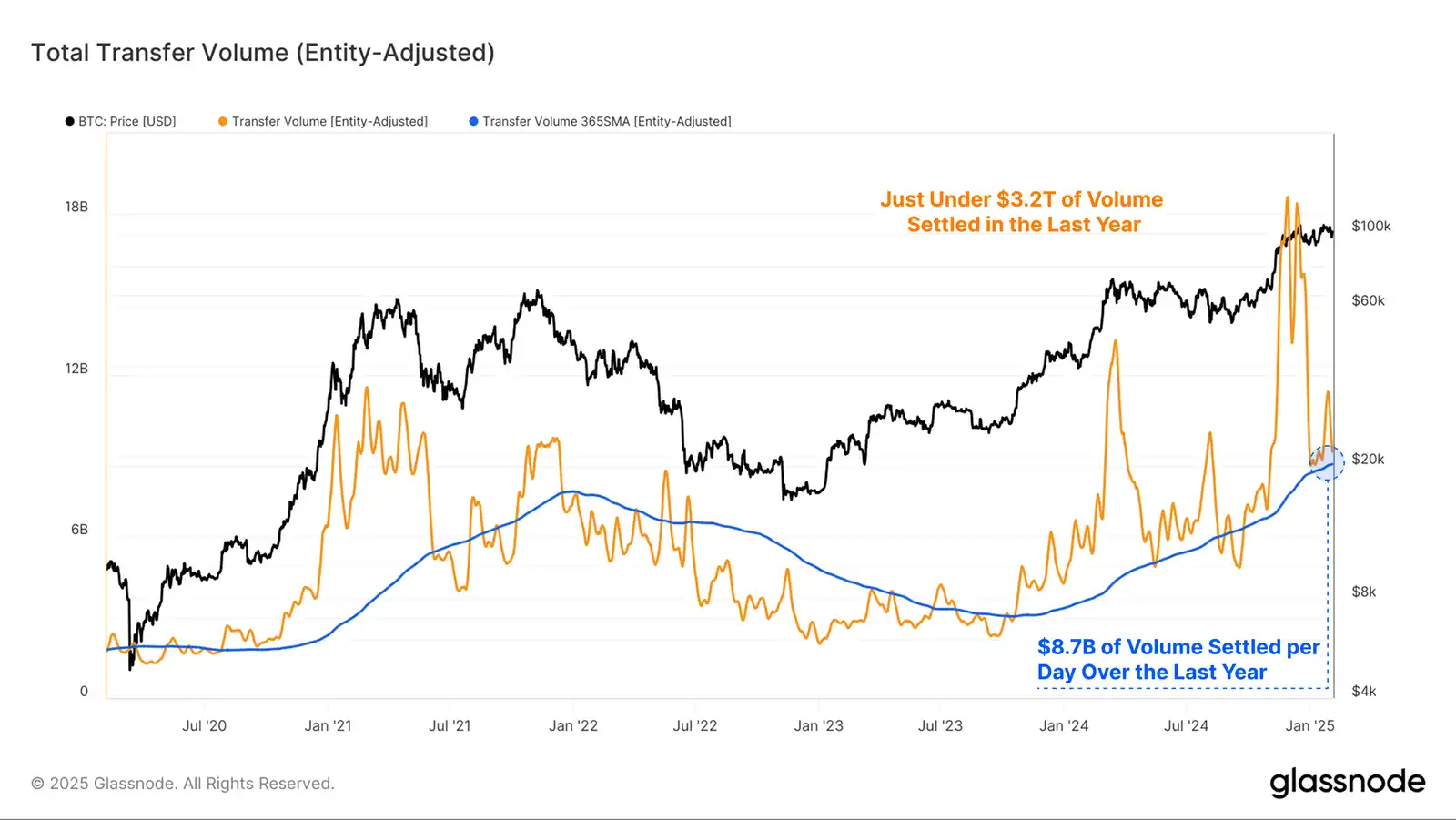
While BTC is commonly seen as an emerging store of value asset, the Bitcoin network also serves as a decentralized rail for BTC as a medium of exchange. The combination of nodes and miners allows for cross-border settlement payments by any individual or entity without the need for interaction with a third-party intermediary.
When utilizing Glassnode's entity-adjusted heuristic approach to filter transactions, over the past 365 days, the Bitcoin network has processed an average of $8.7 billion per day, with a total value transferred in the past year reaching $3.2 trillion.
The actual settlement value and economic activity of the Bitcoin network provide empirical evidence that Bitcoin possesses both "value" and "utility," challenging critics' assumption that Bitcoin lacks both value and utility.
Relative Dominance
After determining the growing importance of Bitcoin as a macro asset, we can shift our focus internally and analyze its relative dominance within the broader digital asset ecosystem.
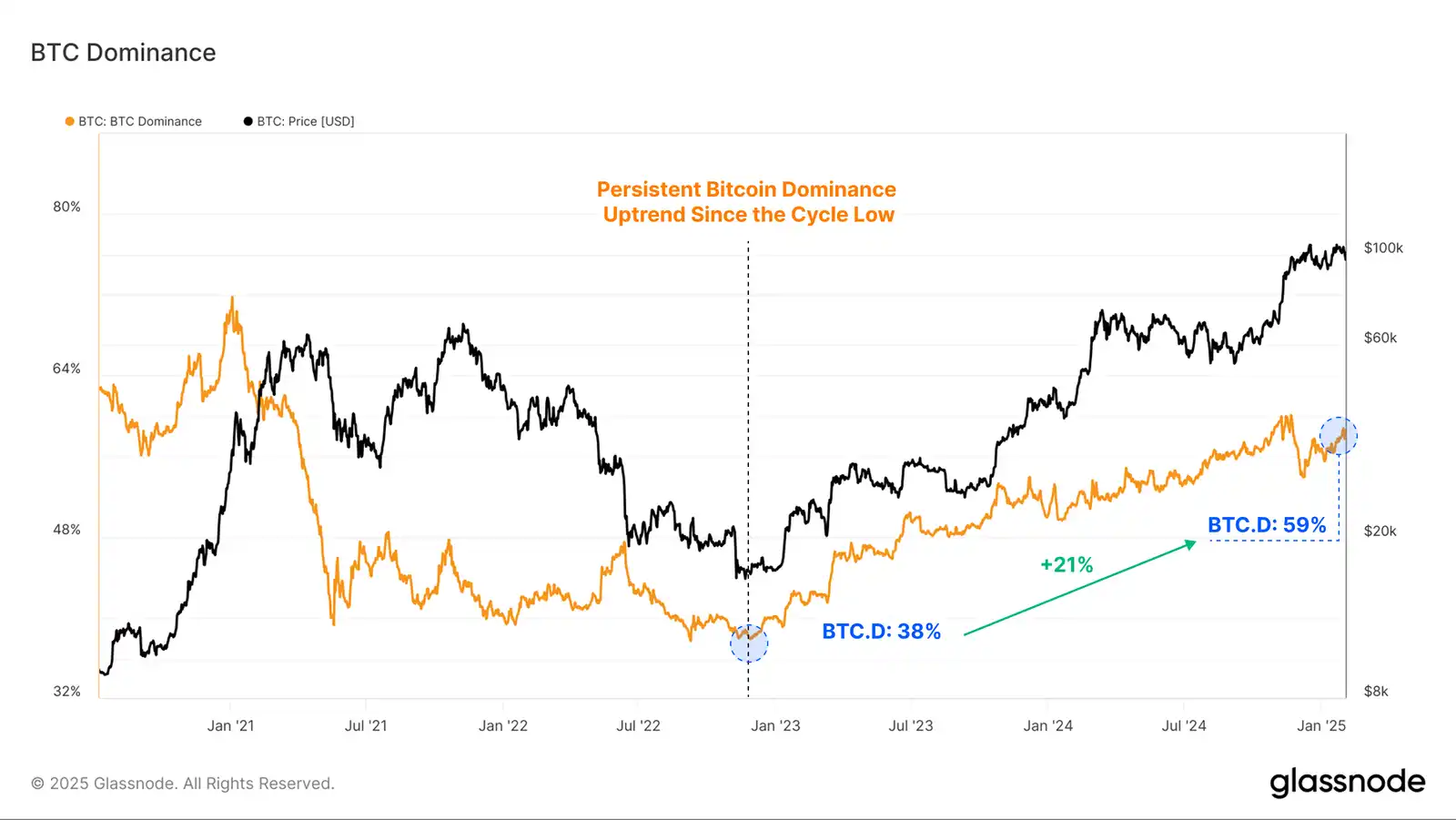
Since the FTX collapse in November 2022, Bitcoin's dominance has been on a continuous upward trend, rising from 38% to 59%. This indicates that in the digital asset space, Bitcoin's net rotation and value accumulation take precedence over other assets.
This may partly be attributed to the broader access provided by the U.S. spot ETF for institutional capital. As a scarce asset, Bitcoin's core narrative is also clearer, with many holding Bitcoin as a hedge against global fiat currency devaluation.
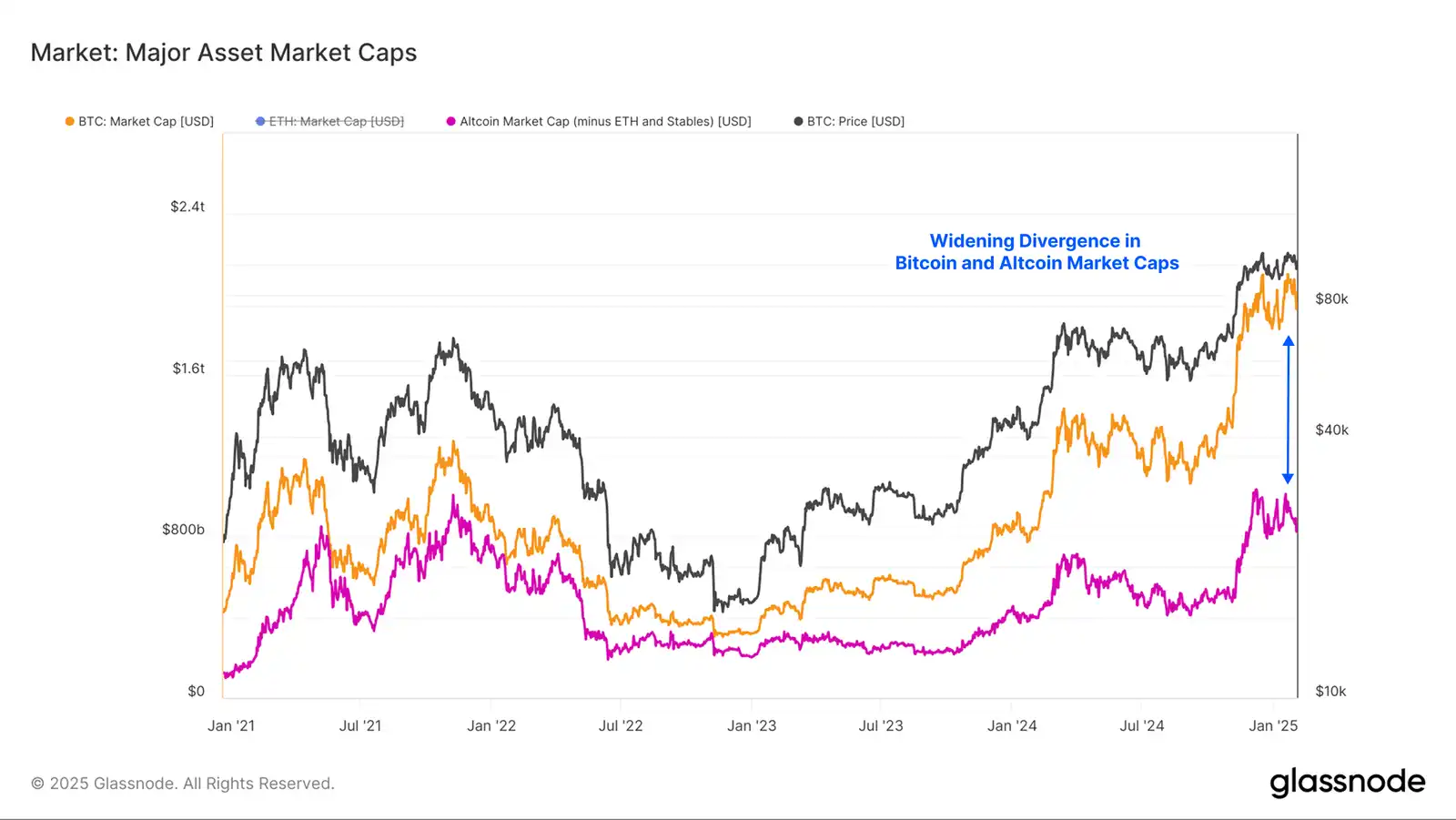
When comparing the market capitalizations of Bitcoin and various altcoins (excluding Ethereum and stablecoins), we can see that the valuation gap is continuously widening. Anchoring ourselves back to the low point of 2022, we can compare the growth in market capitalization.
· Bitcoin Market Cap: $363.0 billion > $1.93 trillion (5.3x)
· Altcoin Market Cap: $190.0 billion > $892.0 billion (4.7x)
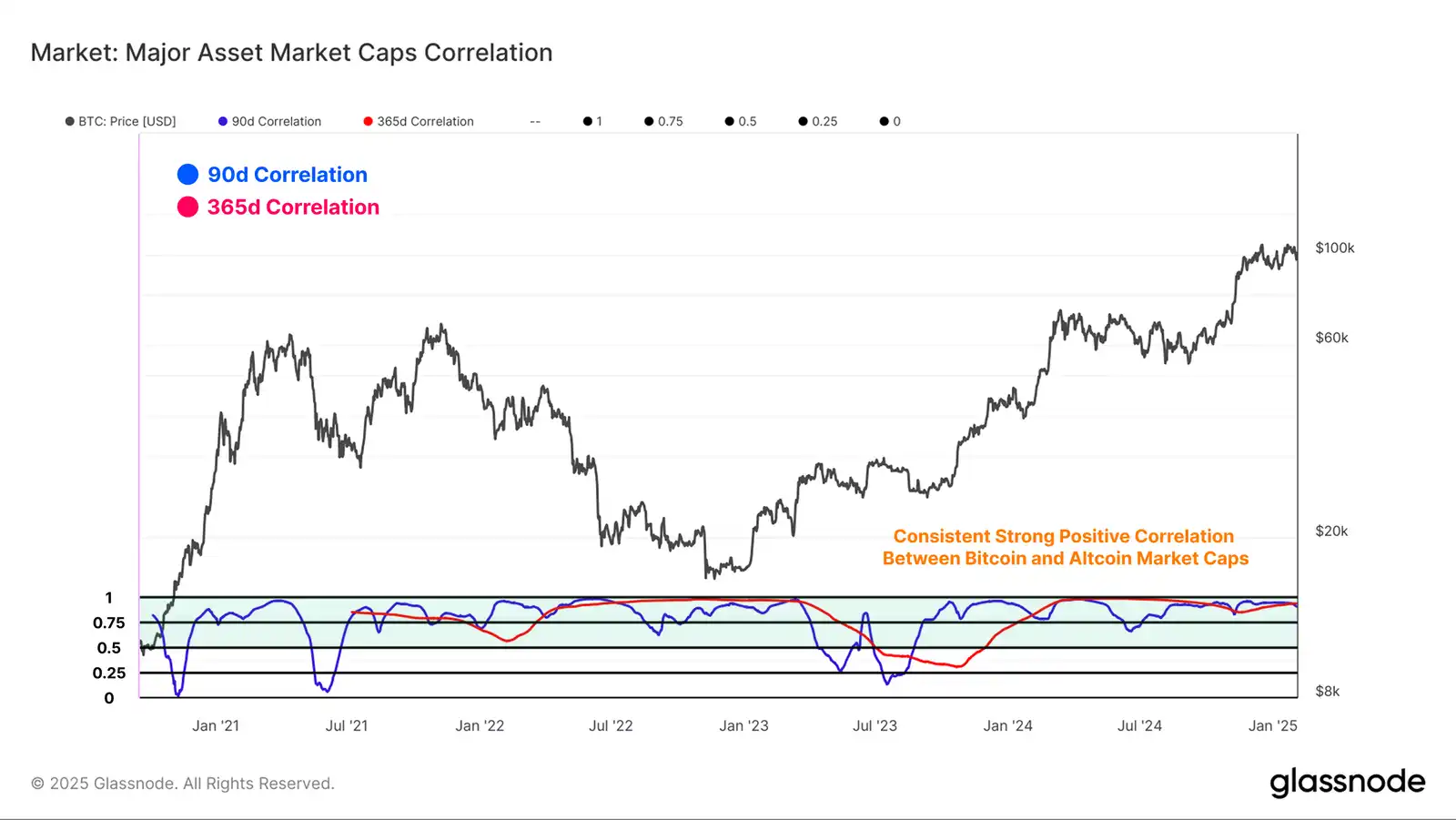
While there is a difference in the valuation scale between Bitcoin and altcoins, the correlation between the two remains strong. This suggests that the reason for this difference is not the growth rate between the two but rather the significant disparity in capital entering Bitcoin versus the altcoin space.
Although Bitcoin continues to receive the majority of capital from investors, it can be expected that Bitcoin's dominance will continue to rise (the reversal of this indicator is a signal of capital rotating in the other direction).
Where is the New Demand?
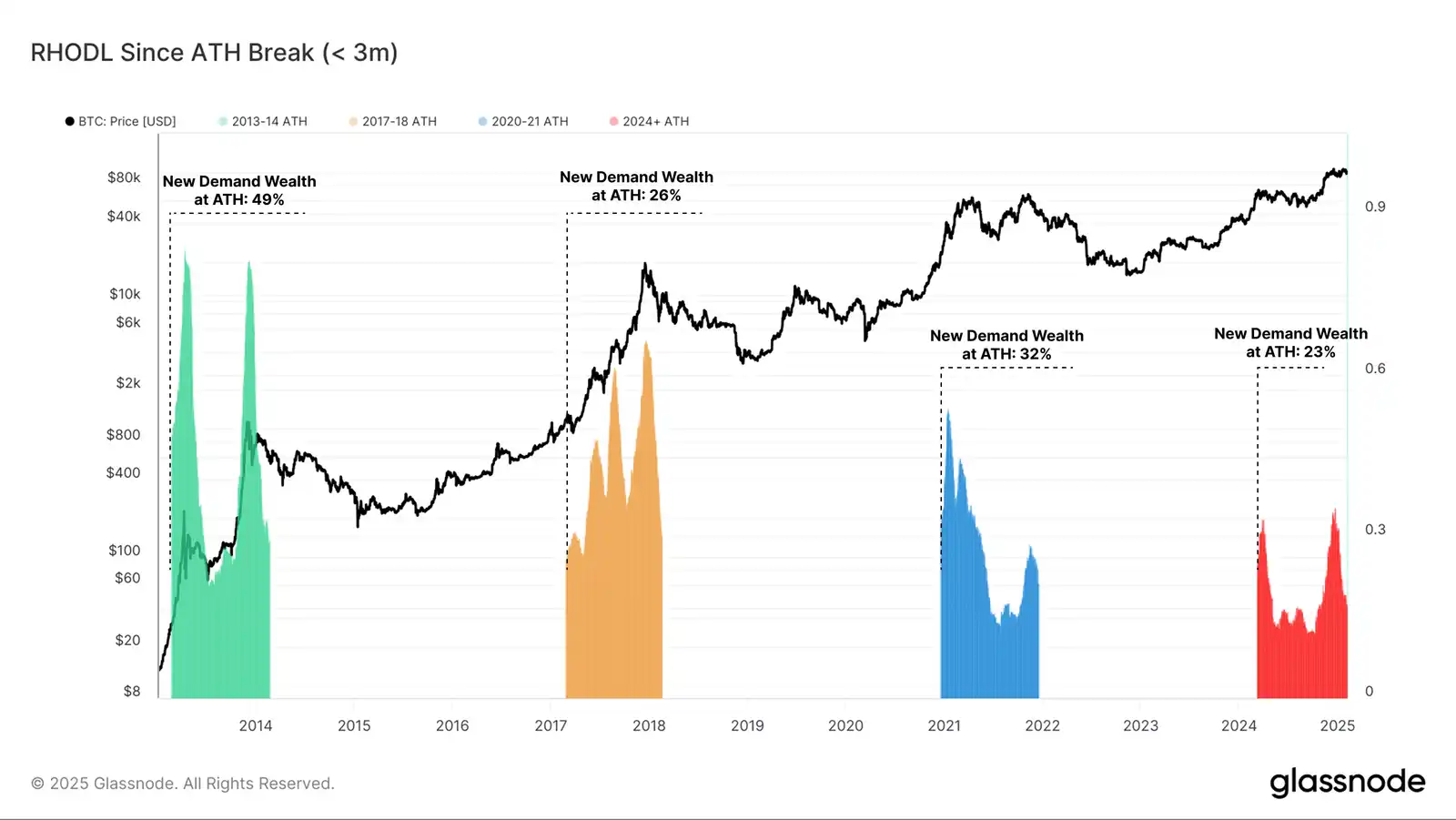
With BTC price breaking the $100,000 barrier, it is expected that Bitcoin's exposure will increase significantly. We can assess this by evaluating the percentage of network wealth held by tokens bought just under 3 months ago. The chart below shows the changes in this metric over the 12 months following a new cyclical ATH.
While the new demand in this cycle is significant, the wealth held by 3-month-old tokens is much lower compared to previous cycles. This indicates that the scale of new demand inflow is not the same, appearing to be more sporadic and peak-oriented rather than sustained.
Interestingly, all previous cycles have ended approximately a year after the first ATH breakout, highlighting the atypical nature of our current cycle, which saw its first new ATH in March 2024.
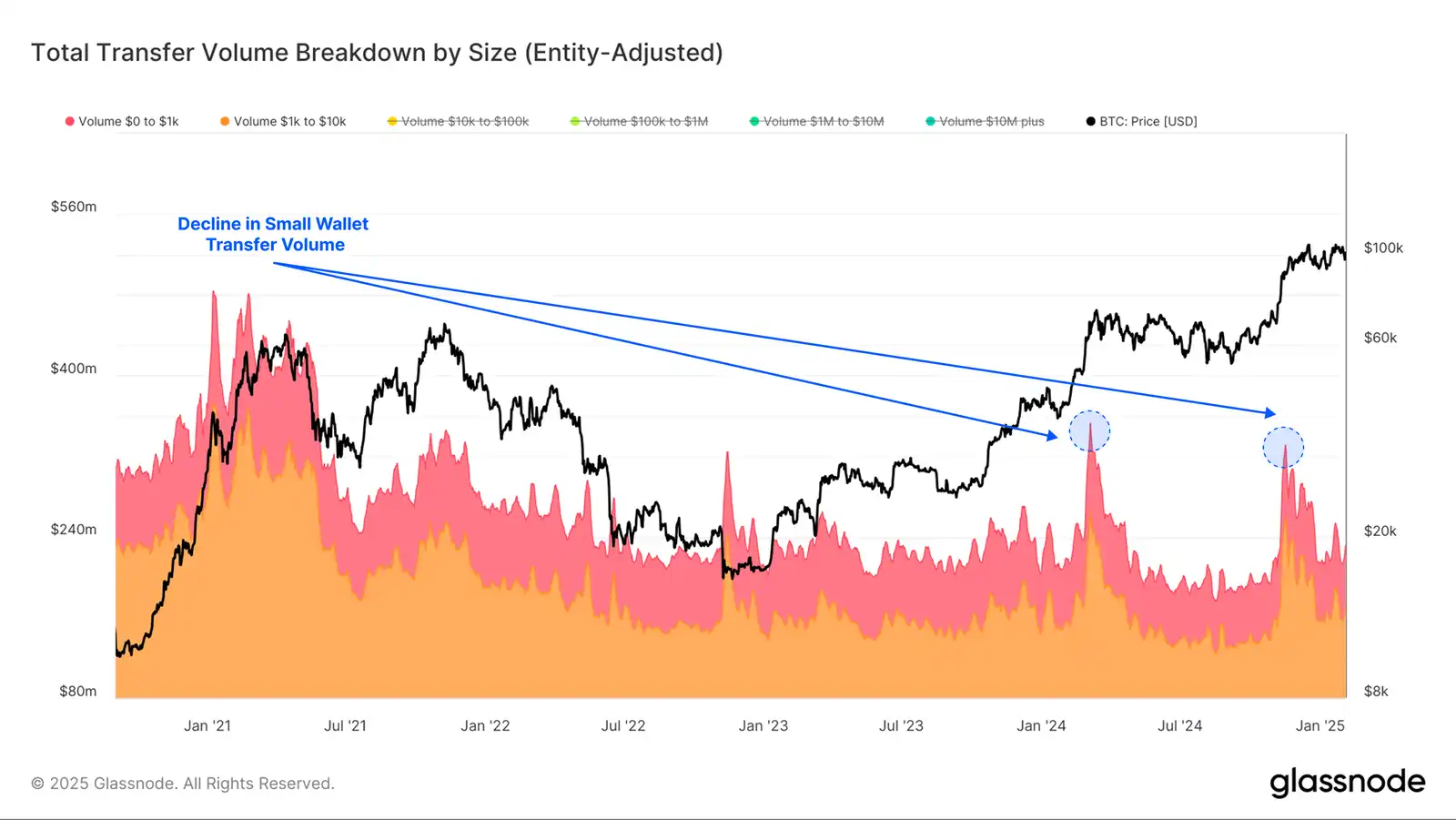
If we separate out the transfer volume of small wallets (less than $10,000) and compare it to the peak levels in 2021, we can see a significant decline. Despite a substantial increase in overall settlement volume this cycle and a significant rise in Bitcoin's price, this trend persists.
This suggests that the new demand for BTC is primarily driven by large entities rather than small retail entities.
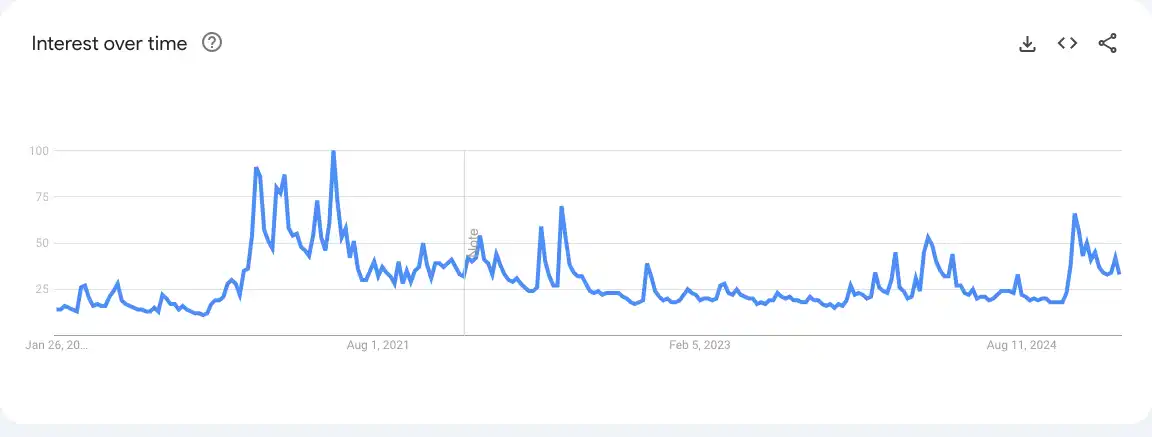
We can also utilize other datasets to support our argument. Despite many bullish factors surrounding the asset, search intensity has not reached the frenzied levels seen during the 2021 bull market.
Evolution of the Investor Base
While the structure of the Bitcoin protocol and consensus code is fundamentally fixed, the market's response to it is an evolving and dynamic process. The regulatory environment continues to change, and new financial instruments such as derivatives and ETF products continue to develop around it. As the Bitcoin ecosystem evolves, the composition of Bitcoin investors also continues to change, most notably in this cycle.
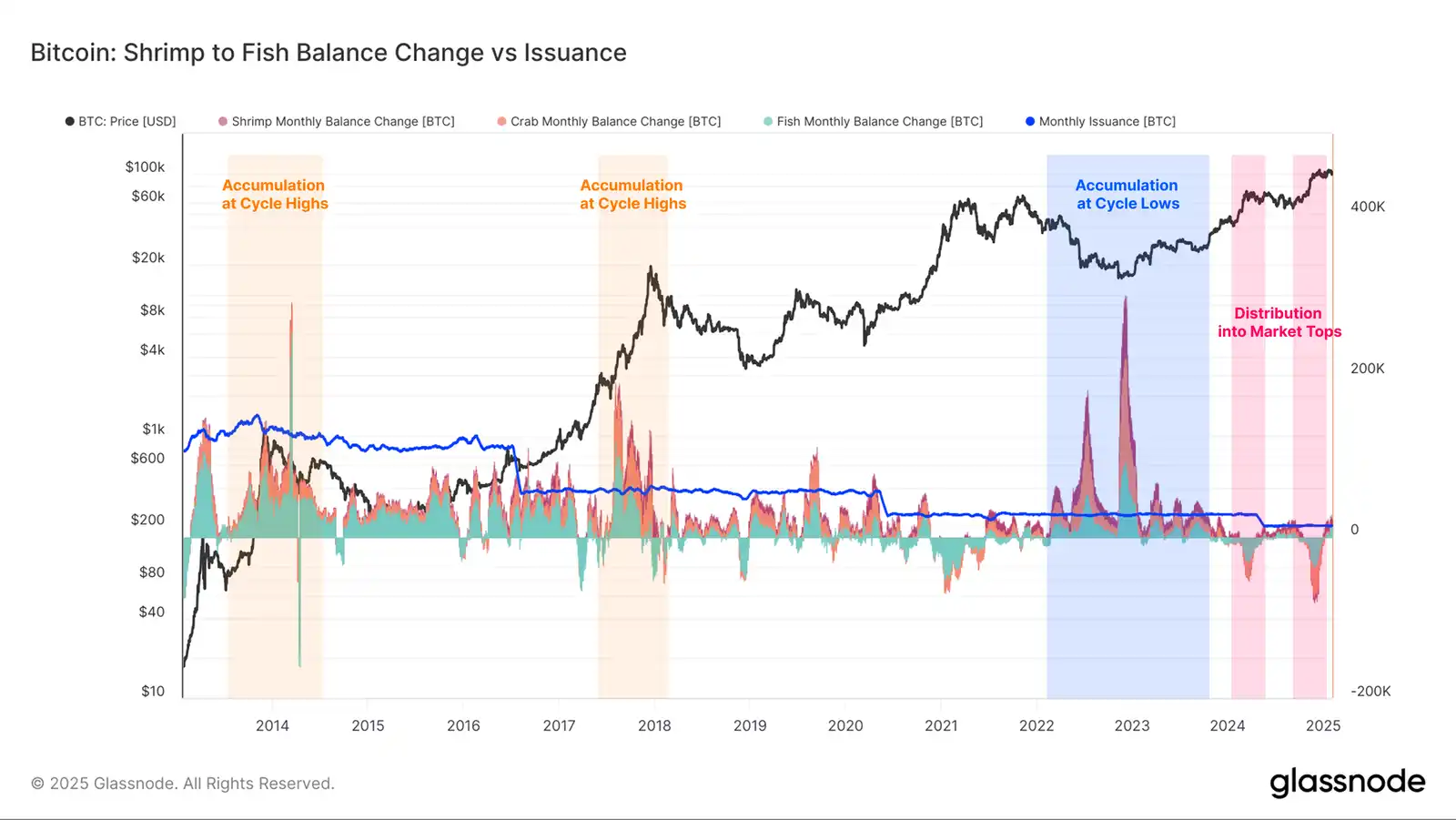
When comparing the balance changes of smaller entities (holding <10 BTC), we observe a noticeable shift in behavior patterns in recent years.
During the bull markets of 2013 and 2017, we could identify periods of significant token accumulation from these groups, often synonymous with "exuberant top buying." This pattern seems to have broken in this cycle, with smaller entities engaging in more intense accumulation during corrections and pullbacks, then transitioning to distribution as the market rebounds to new highs.
This suggests that even within those typically seen as retail investor groups, there exists a more mature and well-educated cohort of investors.
The launch of a US Spot Bitcoin ETF has also provided institutional investors with a new investment channel, offering them a regulated Bitcoin investment opportunity. This has facilitated potential institutional capital inflows, with the ETF seeing net inflows of over $40 billion and a total AUM surpassing $120 billion in the 12 months since its launch.
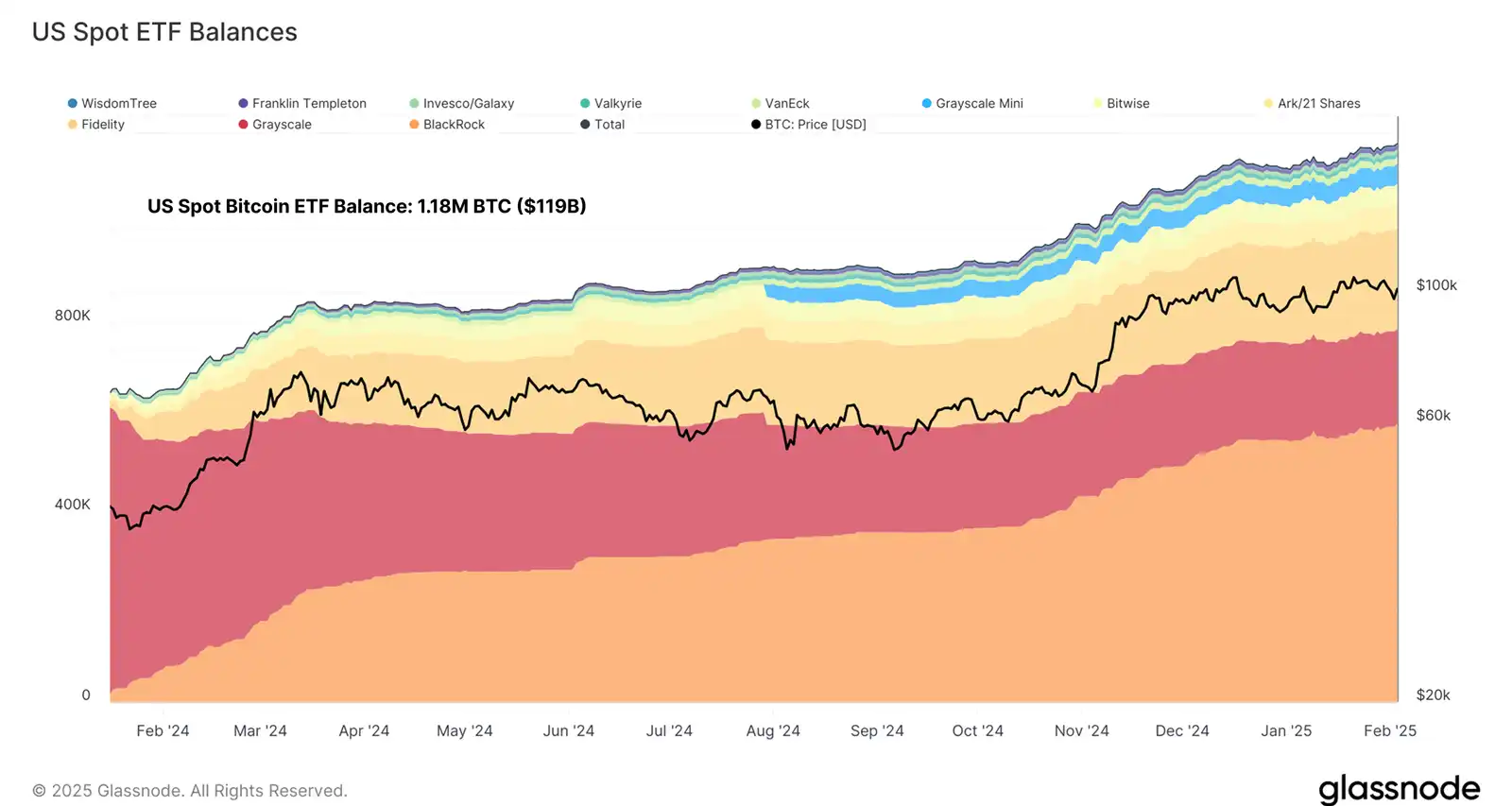
By delving into the IBIT Investor Capital Table (as described by analyst TXMC), we can clearly see signs of increasing institutional investor demand. This further demonstrates that Bitcoin is attracting a more mature investor base.
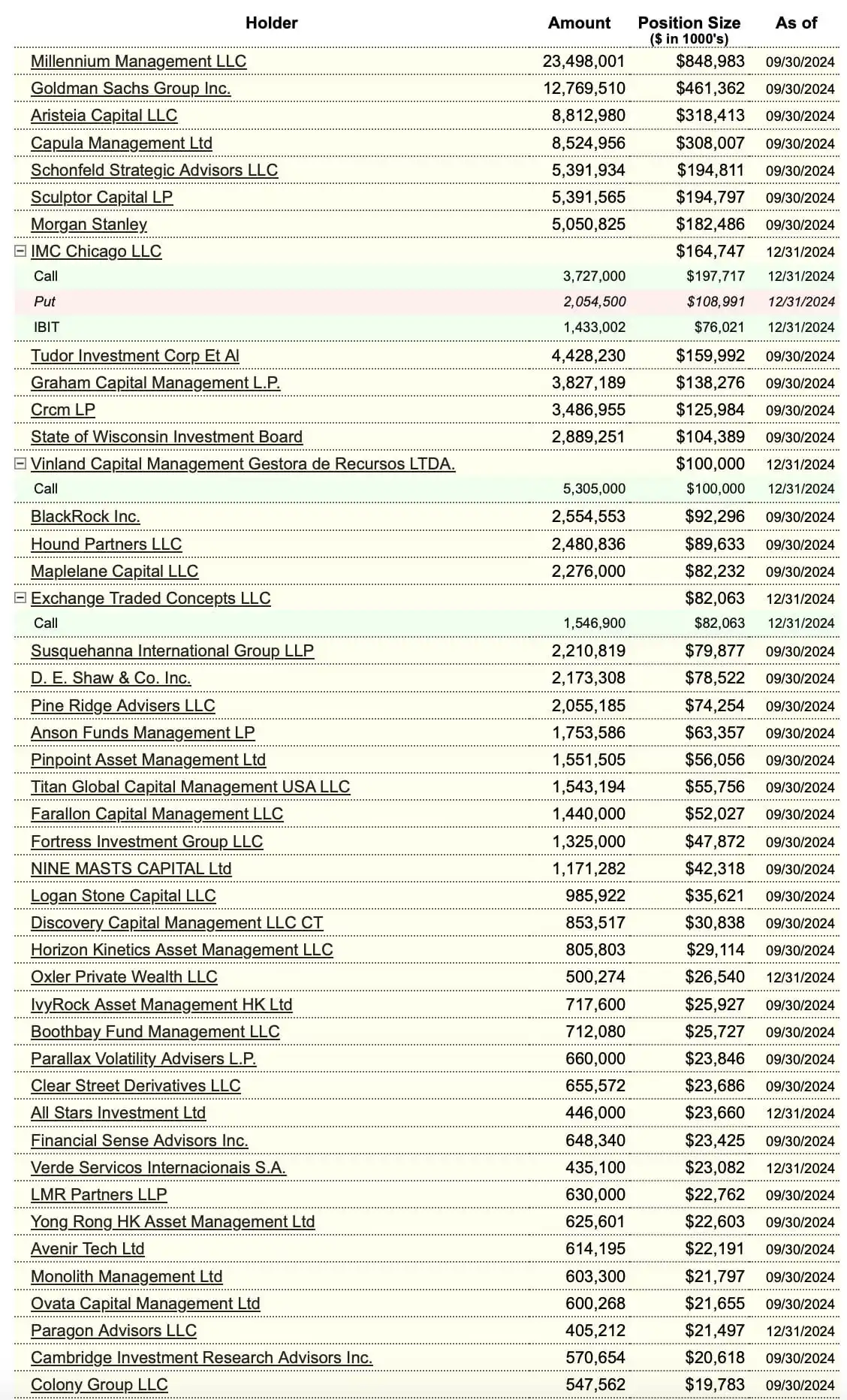
Controlled Downtrend
One of the many advantages of on-chain data is that it can help us analyze investor behavior during periods of stress, such as pullbacks and downturns.
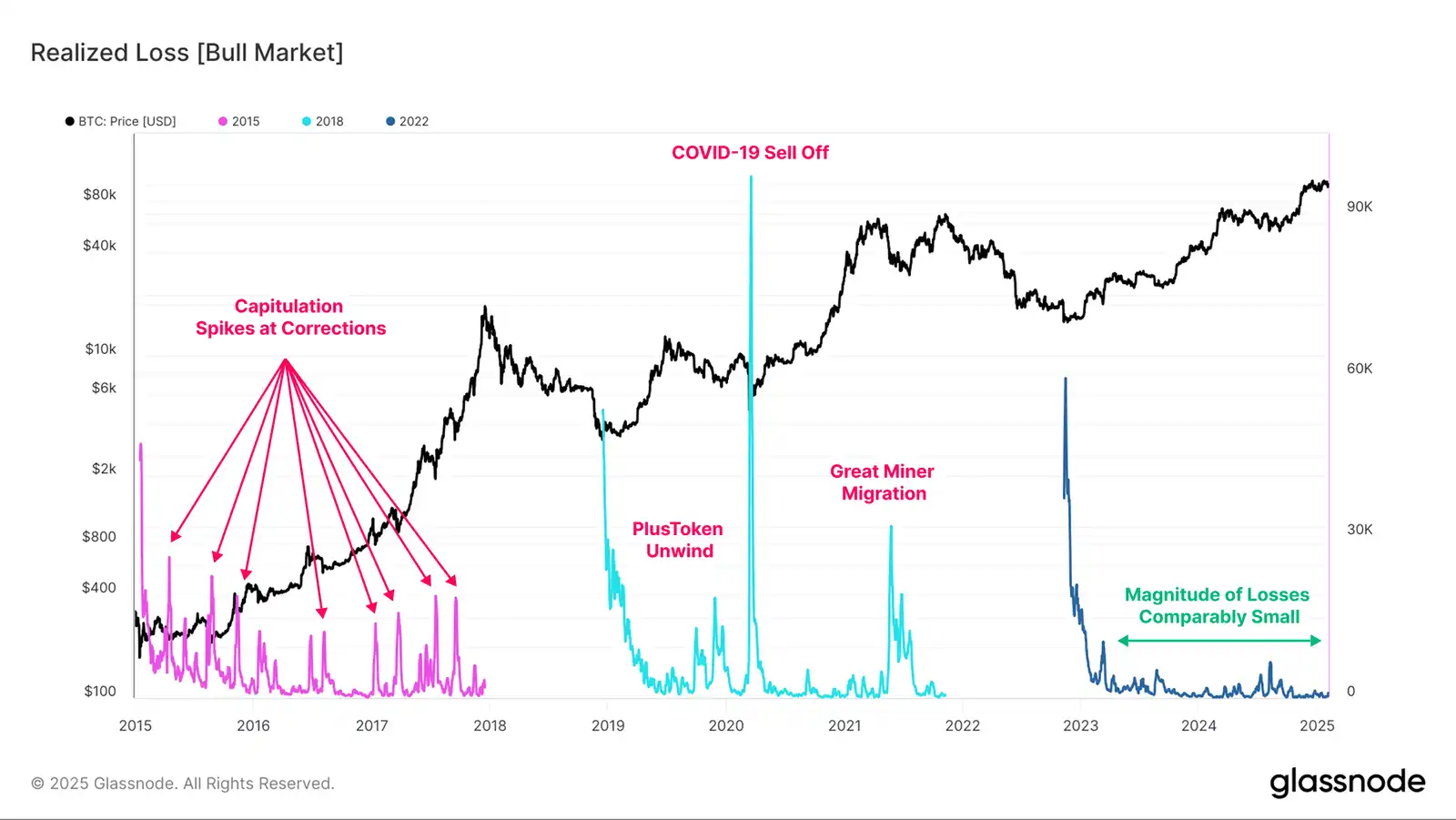
When evaluating the actual loss magnitude locked in during a bull market, our current cycle remains the most conservative. The only significant event where Bitcoin holders suffered substantial losses was the yen carry trade unwinding on August 5th. Apart from this, the loss magnitude remains relatively small, indicating that the investor base is more patient, resilient, and less price-sensitive.
This is in stark contrast to the previous cycle structure, where the 2015-2018 period featured multiple minor sell-off periods. The 2019-2022 period has been more turbulent, experiencing several deep and severe sell-off events, such as the mid-2019 PlusToken unwinding, the March 2020 COVID-19 sell-off, and the mid-2021 large-scale miner migration.
Bitcoin's volatility regime is also in a state of flux, with the actual volatility at historic lows during the bull market. The actual volatility over a three-month rolling window in this cycle is typically below 50%, whereas in the previous two bull markets, the actual volatility often exceeded 80% to 100%.
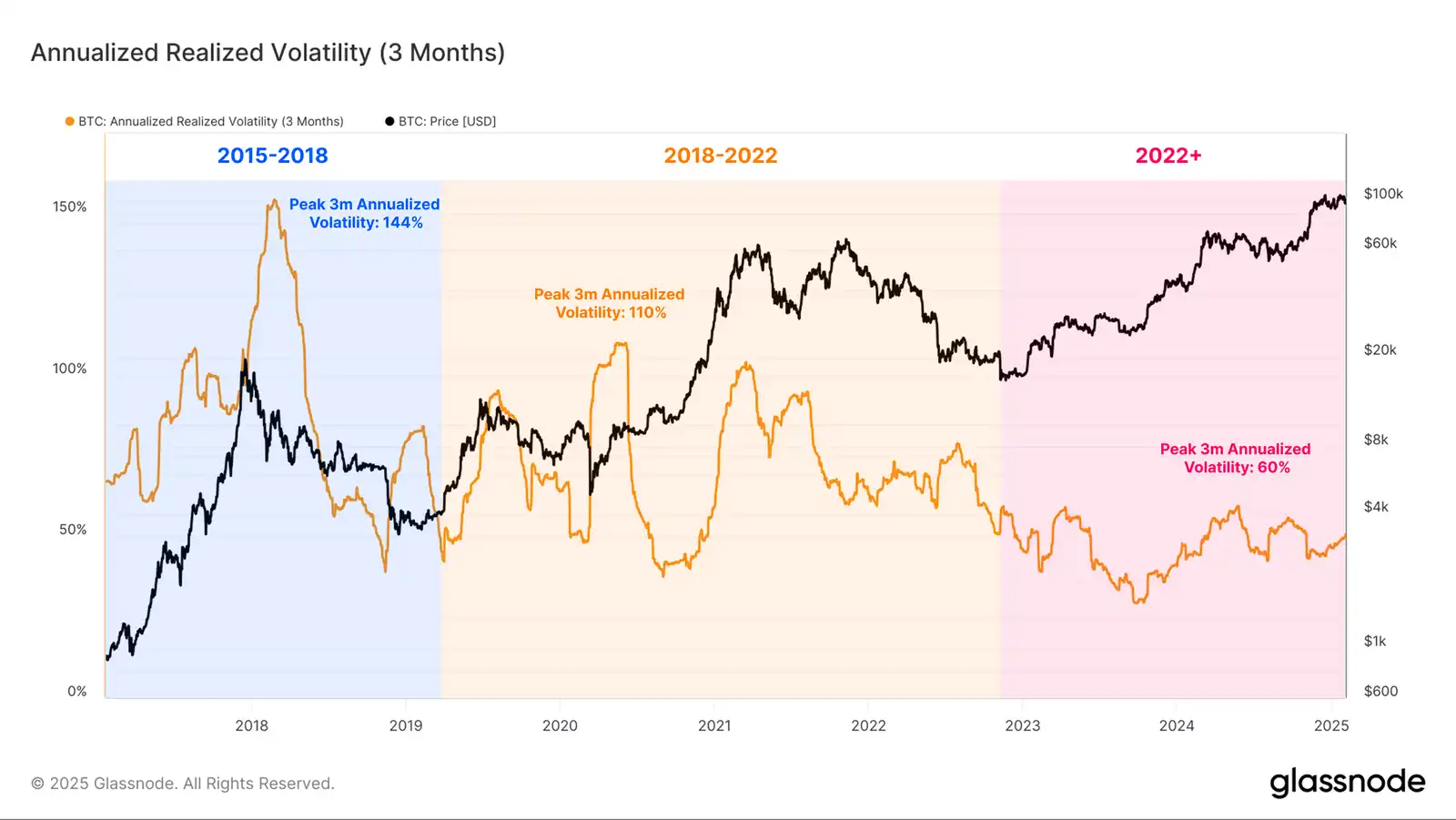
This reduction in volatility, coupled with a relatively composed investor base, manifests in a more stable price structure. So far, the 2023-2025 cycle has been essentially a series of staircase-like price movements (rises followed by consolidation periods).
We have also seen more controlled retracement scenarios, with the current cycle experiencing the shallowest average retracement from local highs of all cycles to date.
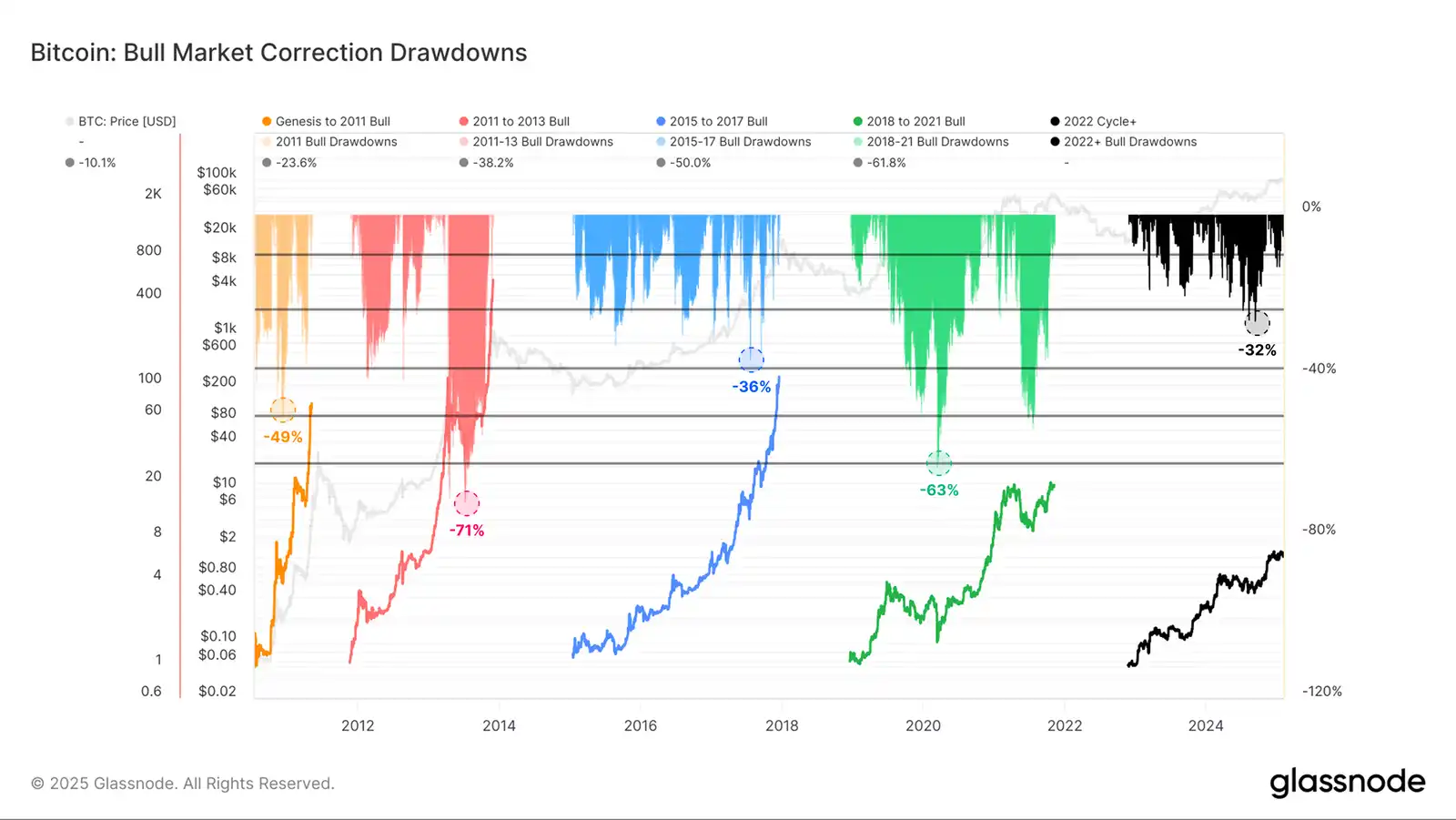
Summary
Bitcoin continues to solidify its position as a global macro asset. It remains available for trading, allowing investors to express their market views at any time of the day, while its deep liquidity enables investors to execute large-scale transactions.
Addressing criticisms regarding Bitcoin's role as a store of value and medium of exchange, the network has attracted over $850 billion in net capital inflows and processes nearly $9 billion in transaction volume daily. These figures largely dispel doubts about these claims.
Recent regulatory changes in the digital asset ecosystem have prompted a shift in investor composition, leading to an increasing presence of mature institutional investors in the Bitcoin market. This cohort of investors, characterized by greater patience, resilience, and less price sensitivity, helps reduce drawdowns and lower volatility.
You may also like

Japan’s Three Megabanks Plan Joint Stablecoin Issuance in Fiscal 2026
MUFG, SMBC, and Mizuho reportedly plan to jointly issue fiat-pegged stablecoins in fiscal 2026, signaling Japan’s growing push into bank-led digital payment infrastructure.

Humanity Discloses H Token Dual-Chain Attack Details, With Losses on Ethereum and BSC Exceeding $36 Million
Humanity said the H token attack across Ethereum and BSC caused more than $36 million in losses after leaked ProxyAdmin keys enabled malicious contract upgrades and token minting.

White House Discusses CLARITY Act With Law Enforcement Ahead of Senate Vote
The White House discussed the CLARITY Act with law enforcement ahead of a Senate vote, focusing on illicit finance risks and developer protections.

$75 billion in foreign capital has fled, and South Korean retail investors have absorbed it all using leverage

Bitcoin Trading Guide 2026: Strategies for Experienced Traders

What Is XAUT and PAXG? Why Tokenized Gold Is Booming in 2026

Cryptocurrency CEXs are flocking to sell US stocks, and traditional brokerages are facing an "uninvited guest."

Will the SpaceX IPO Hurt Bitcoin? Here's What Traders Are Watching
Foreign selling in the South Korean stock market accelerates, with cumulative net sales reportedly reaching $75 billion this year
On June 9, The Kobeissi Letter, citing Goldman Sachs data, reported that global investors are selling South Korean stocks at an unusually rapid pace. In the latest trading session, foreign investors sold about $801 million worth of Kospi constituent stocks again; total foreign outflows last week reached about $10 billion, and the market has been in net foreign selling on nearly every trading day over the past month. According to the data cited in the report, foreign investors have sold about $75 billion worth of South Korean stocks so far this year. Meanwhile, South Korean retail and institutional investors together recorded roughly $69 billion in net buying over the same period, suggesting that the market’s main buying support has come from domestic capital rather than returning overseas funds. The information currently disclosed still mainly comes from The Kobeissi Letter’s retelling and Goldman Sachs data summaries, while public details on the statistical period and the specific definition of “selling” remain relatively limited.

Fortune Warns of Strategy’s Financing Structure Risks as Bitcoin Premium Narrows
Fortune warned that Strategy’s Bitcoin treasury model faces growing financing risks as MSTR’s net asset premium narrows and preferred stock dividend pressure increases.

Ferrari Challenge Le Mans: Carl Moon to Dominate in WEEX Livery

Sahara AI Responds to SAHARA’s Sharp Drop: No Contract or Product Security Issues Found, Internal Investigation Underway
Sahara AI responded to SAHARA’s 60% price drop, saying no token contract or product security issues have been found and an internal investigation is underway.

WEEX Deposit/Withdrawal Dynamic Island: Your Asset Status, Always in Sight
Scaling Crypto Derivatives: The Digital Asset Infrastructure Behind High-Volume Trading
In the fast-moving digital asset ecosystem, derivatives platforms face an extreme architectural test. High-leverage futures markets demand more than just standard security—they require absolute operational precision, zero-latency matching engines, and ironclad structural scalability, all while navigating intense market volatility.
As global platforms scale to meet these demands, the industry is shifting away from rigid, monolithic setups toward a more agile, "decoupled" infrastructure philosophy.
The Blueprint for High-Volume Copy TradingFor elite global exchanges like WEEX (founded in 2018), this architectural choice becomes critical when scaling high-volume retail features like social copy trading. When thousands of users automatically mirror the real-time strategies of elite traders simultaneously, it triggers sudden, monumental spikes in concurrent transactional volume.
To prevent execution latency or settlement bottlenecks during these peak volatility events, a platform's primary engine must remain entirely dedicated to risk management, copy-trade synchronization, and order matching.
The Architectural Rule: New-generation platforms must separate front-end user execution engines from heavy backend infrastructural overhead to eliminate operational friction.
By separating these layers, platforms can maintain complete sovereignty over their trading environments and user experiences while strategically aligning with institutional-grade infrastructure ecosystems. This strategic framework allows modern exchanges to leverage advanced Digital Asset Custody infrastructure such as Cobo’s behind the scenes, ensuring that backend wallet management scales elastically alongside trading spikes.
Capitalizing on Market Momentum and 400× LeverageIn a derivatives arena where platforms offer up to 400× leverage on perpetual contracts, capital efficiency and market agility are core business metrics. To capture market momentum, an exchange needs the ability to rapidly expand its asset offerings, supporting everything from legacy crypto assets to sudden, trending altcoins across a massive library of trading pairs.
Adopting a flexible, scalable Wallet-as-a-Service (WaaS) solution such as Cobo’s could completely rewrite the development timeline for high-growth exchanges. Instead of spending months of engineering capital building out custom backend wallet architectures for every new blockchain network, platforms can deploy localized infrastructure in days.
This agility allows platforms to instantly scale their listings to over a thousand trading pairs without compromising security or delaying time-to-market. It mirrors the exact operational advantages seen during high-velocity market events, similar to how advanced wallet infrastructure empowers platforms during sudden asset surges; allowing exchanges to pass that speed and liquidity directly to their global user base.
A Mature Foundation for GrowthThe synergy between trusted infrastructure ecosystems and global trading platforms represents the natural evolution of a maturing crypto market. As WEEX continues to scale its global spot and derivatives offerings for over 6 million users, adopting robust backend paradigms proves that platforms no longer have to compromise between cutting-edge trading velocity and uncompromised structural security.

Morning Report | BitMine increased its holdings by 126,971 ETH last week; trader Eugene announced his exit from the crypto market

Wang Chuan: How can one not feel anxious after the neighbor Old Wang made thirty times profit by investing in storage stocks? (Seven) - A quarter-century cycle

Get Paid to Onboard? Try WEEX’s New Homepage with Rewards for Registration, Deposit & Trade
WEEX Custom Layout: Build Your Perfect Trading Workspace in Seconds
Japan’s Three Megabanks Plan Joint Stablecoin Issuance in Fiscal 2026
MUFG, SMBC, and Mizuho reportedly plan to jointly issue fiat-pegged stablecoins in fiscal 2026, signaling Japan’s growing push into bank-led digital payment infrastructure.
Humanity Discloses H Token Dual-Chain Attack Details, With Losses on Ethereum and BSC Exceeding $36 Million
Humanity said the H token attack across Ethereum and BSC caused more than $36 million in losses after leaked ProxyAdmin keys enabled malicious contract upgrades and token minting.
White House Discusses CLARITY Act With Law Enforcement Ahead of Senate Vote
The White House discussed the CLARITY Act with law enforcement ahead of a Senate vote, focusing on illicit finance risks and developer protections.
$75 billion in foreign capital has fled, and South Korean retail investors have absorbed it all using leverage
Bitcoin Trading Guide 2026: Strategies for Experienced Traders
What Is XAUT and PAXG? Why Tokenized Gold Is Booming in 2026


