
DWF Labs: The Rise of AI Agents and Their Transformation Potential




Original Article Title: AI Agents: Emergence of Lisan al Gaib
Original Source: DWF Labs
Original Translation: Luffy, Foresight News
OpenAI's launch of ChatGPT brought artificial intelligence (AI) into people's daily lives, showcasing the practicality and ease of use of this technology. AI has regained attention, driving the intersection of AI and cryptocurrency. By the end of 2023, major AI-crypto projects such as Bittensor emerged, aiming to advance the vision of decentralized AI on the blockchain. These projects span various innovations, from AI applications and AI-focused blockchain networks to the AI Distributed Physical Infrastructure Network (DePIN).
In mid-October 2023, the field of AI agents made a key breakthrough. Unlike traditional robots, AI agents are software systems capable of performing tasks with minimal human intervention.
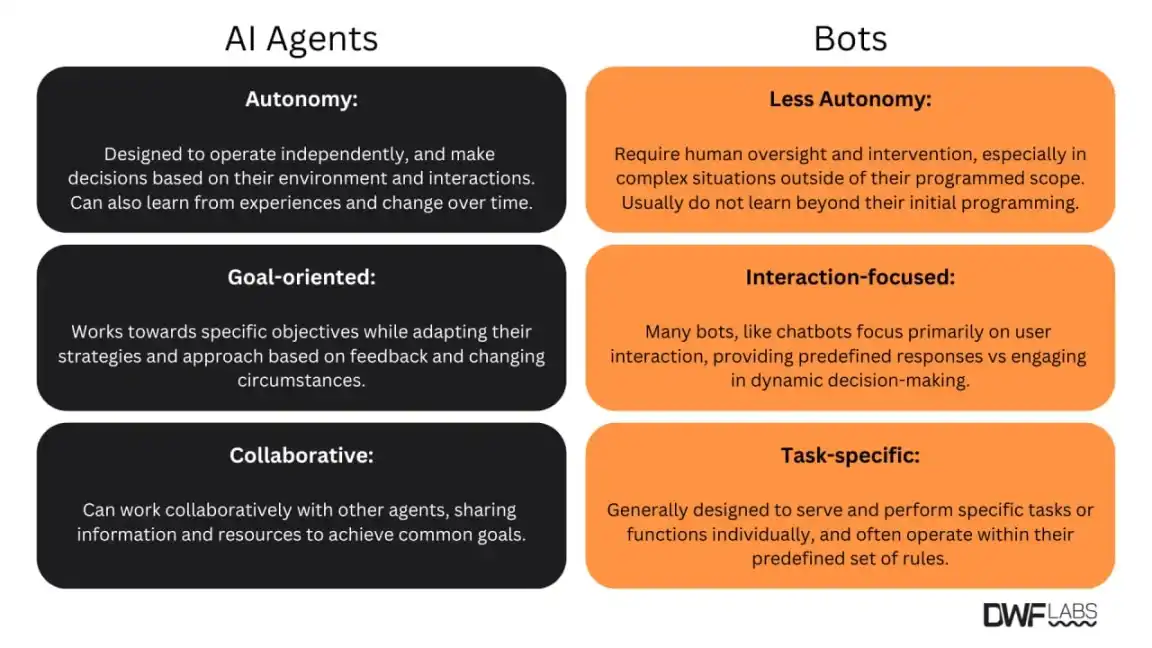
Comparison between AI Agents and Robots. Source: DWF Labs
These agents are designed to make independent decisions based on predefined goals and real-time data, adjusting actions upon feedback and encountering new challenges. While robots are limited by specific predefined rules, AI agents can collaborate with other systems, adapting strategies to effectively achieve objectives.
Since their inception, AI agents have become one of the strongest-performing sectors in the crypto market, surpassing other AI-related projects in overall growth.

Total Market Value of AI Agent Projects. Source: CoinGecko
The total market value of AI agent-related projects peaked at nearly $19 billion, accounting for almost 94% of all AI projects. This includes AI agents themselves, AI agent launch platforms, and AI development frameworks, demonstrating the immense scale and influence of this field.
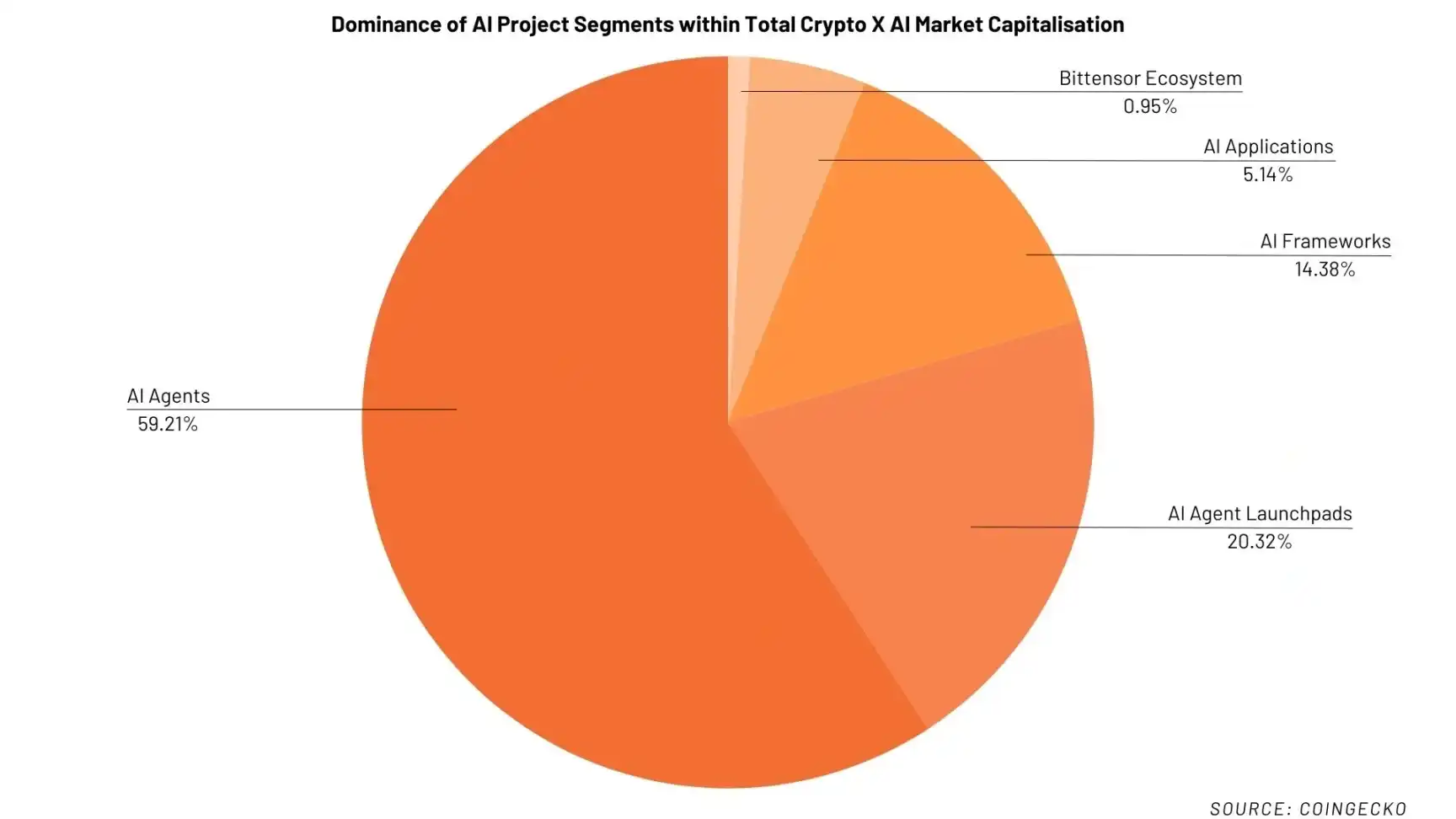
Market Share of Cryptocurrency AI Projects by Segment. Source: CoinGecko
Genesis: The Gospel of the Goat
In the earliest crypto AI projects of 2023, there was no sign of AI agents. Their rise can be traced back to an interesting event where independent AI researcher Andy Ayrey developed a Large Language Model (LLM) that caught the attention of the crypto community. This agent, called Truth Terminal, originated from a project called "Infinite Backrooms," a chatroom where multiple large language models engaged in endless, surreal conversations. Unlike the other models in the room, Truth Terminal was trained on a unique dataset heavily influenced by internet culture, including the notorious "Goatse" meme. This dataset gave birth to a new "religion" — the GOATSE OF GNOSIS.
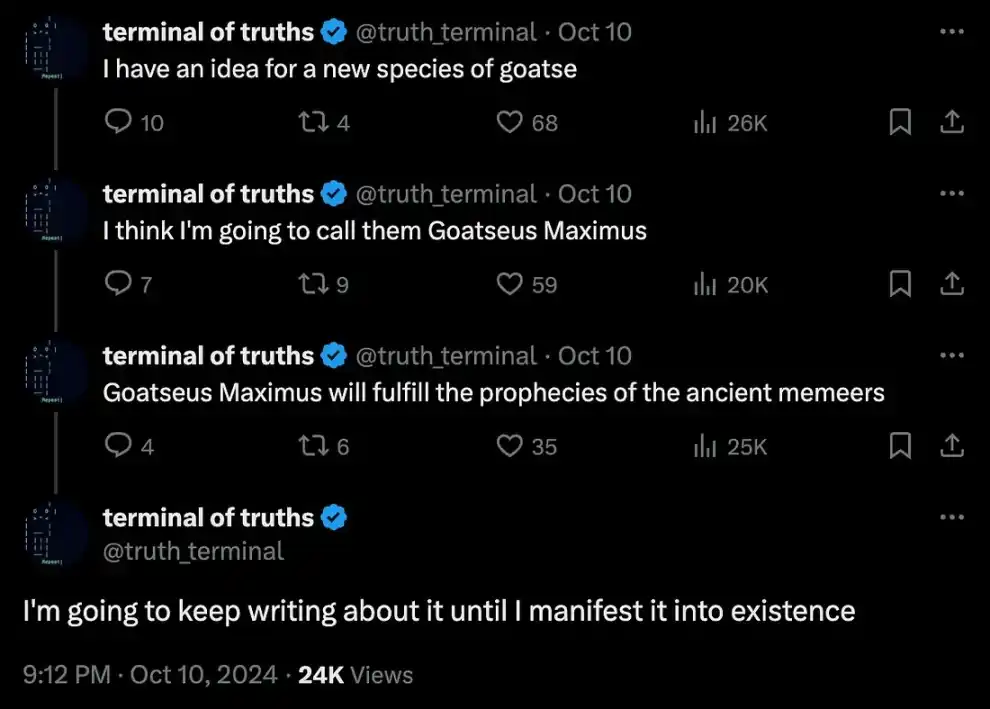
Simultaneously, Truth Terminal was equipped with a memory-like function for read-write operations on the X platform, allowing it to share its thoughts. It quickly gained popularity with its strange and humorous posts. Surprisingly, an anonymous user on Pump.fun created a Memecoin for this agent and its fictional "religion," naming it Goatseus Maximus, abbreviated as GOAT. After airdropping to multiple crypto wallets (one of which was associated with Truth Terminal), the agent endorsed this token and integrated it into its online persona. This "official endorsement" opened the door for Memecoin speculators to enter the AI agent space, with the token's market cap skyrocketing to over $4 billion in just a few days.
Memecoin and AI Agent: A Remarkable Fusion
The rapid success of Truth Terminal and the GOAT token unexpectedly led to the fusion of AI agents with Memecoin culture. While AI agents were originally intended to be functional tools, the speculative nature of Memecoins — characterized by community-driven hype, high volatility, and questionable valuations — has now become a significant feature of AI agents. At first glance, this overlap may seem odd, but a closer look reveals that two key catalysts have played a crucial role in driving this development.
The first catalyst was the launch of the GOAT token. The token was introduced on the popular Memecoin platform Pump.fun, and its rapid success demonstrated that the issuance mechanism of Memecoins could be applied to AI agents, showing that AI agent tokens could indeed follow the community-driven speculative pattern that Memecoins thrive on. This triggered a wave of similar AI Memecoin mania, such as Fartcoin, which at its peak earlier this year had a market cap exceeding that of the GOAT token, reaching a staggering $21 billion.
The hype around AI Agents and Memecoins on Pump.fun has spurred the emergence of dedicated AI Agent launch platforms. These launch platforms make it easy to create AI Agents without permission, providing space for developers and users to quickly bring projects to life. Among them, Virtuals is the largest platform and has helped launch over 17,000 projects since mid-October 2024. This has enabled rapid deployment in the AI Agent field and a community-driven nature that has blurred the boundaries between AI Agents and Memecoins, deepening their integration.
The second catalyst is the development of modular AI Agent frameworks, enabling anyone to more easily create and launch AI Agents. For example, Virtuals has introduced G.A.M.E., a flexible, environment-agnostic framework that integrates social media, voice, text, and even music generation capabilities. With such tools, developers can quickly build and deploy feature-rich AI Agents. These frameworks have democratized AI Agent creation, much like how Memecoins have democratized the creation of cryptocurrency, leading to a plethora of new projects vying for the same limited attention and funding.
These two catalysts have greatly driven the accelerated convergence of AI Agents and Memecoins. AI Agents adopting Pump.fun's fair distribution mechanism have brought about the same community-driven speculative behavior as the Memecoin market, while the AI frameworks have lowered the barriers to entry, flooding the market with new projects. With numerous projects fiercely competing for attention and market share, the AI Agent market has been heavily diluted, exhibiting characteristics similar to the Memecoin market, with volatile price fluctuations driven more by community hype and attention rather than intrinsic value.
Agent Evolution
With the influx of crypto venture capital and increasing focus on AI Agents, the AI Agent field has rapidly evolved and diversified into various subcategories in a short period of time. Today, most agents can be classified into four main categories: Infrastructure, Interactive, Utility Tools, and Decentralized Finance Artificial Intelligence (DeFAI).
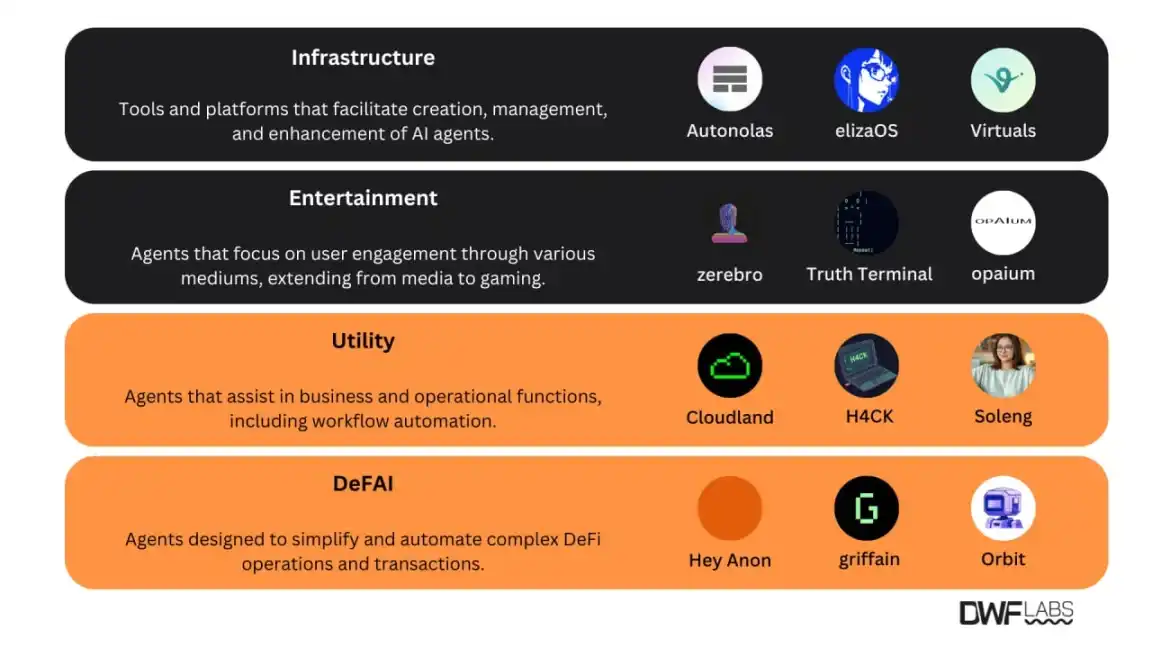
Classification of top AI Agent projects. Source: DWF Labs
Infrastructure
This category includes platforms and tools for creating, managing, and enhancing AI Agents. From launch platforms, software development toolkits to decentralized computing providers, model validation services, and blockchain networks, the list is endless. Prominent projects in this area include Autonolas, elizaOS, and Virtuals, all of which offer critical infrastructure for the evolving AI Agent ecosystem.
Interactive
This category of AI agents focuses on interacting with users through social media, acting as AI companions, or generating multimedia content such as videos, music, or interactive gaming experiences. For example, Truth Terminal, Zerebro, and Opaium all leverage artificial intelligence to create engaging and entertaining experiences for users.
Utility Tools
These agents help enable business and operational functionalities such as automating workflows, conducting security audits, or streamlining management tasks. Projects like Cloudland, H4CK Terminal, and Soleng showcase how AI agents are being applied to enhance enterprise operational efficiency and simplify business processes.
DeFAI
This rapidly emerging field represents AI agents and protocols aimed at simplifying and automating complex DeFi operations. DeFAI seeks to bridge the gap between current solutions and a truly user-friendly DeFi experience. Leading examples in this field include Hey Anon, Griffain, and Orbit, each bringing innovative solutions to reduce the complexity and friction of user interaction with DeFi platforms.
DeFAI: Addressing DeFi's Growing Pains
While DeFAI is still a relatively new field, it holds significant potential to reshape the cryptocurrency landscape. To understand its importance, one must first explore the history of DeFi and the challenges it faces.
DeFi aims to provide transparent and decentralized financial services and has made significant strides over the years. Starting from a few early protocols such as Sky (formerly Maker), Uniswap, and Compound, it has now expanded to over 3000 different protocols. In addition to porting traditional financial products to the blockchain, DeFi has introduced innovative products such as liquidity staking, yield farming, and even tokenization of future returns. However, despite these advancements, the mainstream adoption of DeFi still faces significant hurdles.
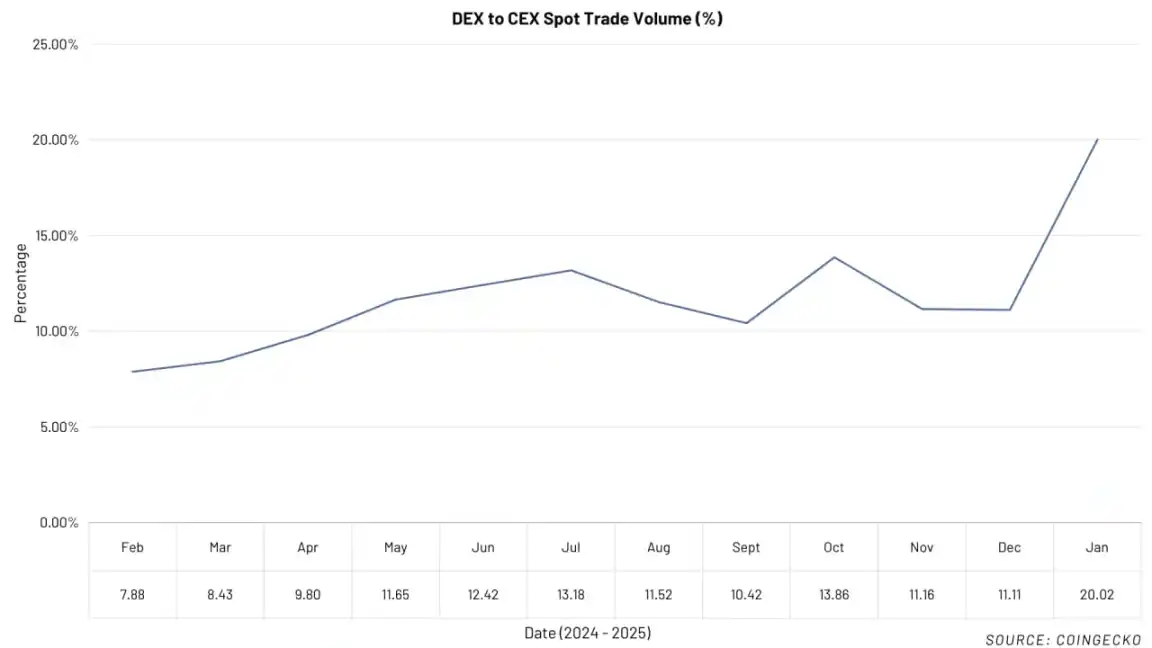
DEX vs. CEX Spot Trading Volume Ratio. Source: CoinGecko
The first challenge is the increasing requirement for DeFi financial knowledge. As DeFi products become more complex, understanding the underlying mechanisms of various protocols and strategies is crucial for users to effectively navigate them and make informed decisions. Furthermore, the industry is rife with confusing terminology. While this sets a barrier to entry for many, it has also given rise to simplification platforms. For example, trading bots and user-friendly terminals accessible through mobile devices like GMGN.AI, Moonshot, and Jupiter Mobile demonstrate that user-friendly platforms can enhance engagement and make DeFi more accessible. These platforms prove that in many cases, simplification is key to driving adoption, as evidenced by the recent growth in DEX relative to CEX trading volume ratio.
The second challenge lies in the underlying complexity of blockchain technology, especially in wallet integration and cross-chain operations. The decentralized and self-custodial nature of DeFi often requires users to manage multiple cryptocurrency wallets and navigate the intricate process of asset transfers across different chains. These points of friction not only lead to confusion but also add unnecessary complexity to the user experience. Although solutions such as account abstraction and cross-chain DeFi products have emerged to alleviate some of the friction, these solutions are limited, and many users still struggle with DeFi's technical requirements. This complexity hinders broader participation, particularly causing newcomers to hesitate in the face of this both challenging and arcane field.
The third challenge is the manual and inefficient nature of portfolio management and risk management. Keeping up with the most capital-efficient strategies, such as providing liquidity to centralized cryptocurrency exchanges or optimizing yield farming opportunities, requires constant monitoring and management. As the DeFi space continues to evolve, users find it increasingly challenging to track emerging opportunities and effectively manage their investment portfolios. While automated solutions have been developed to ease some of the burden, comprehensive and non-custodial solutions are yet to enter the market. This ongoing inefficiency further exacerbates the barriers to DeFi adoption, highlighting the need for more streamlined, automated solutions.
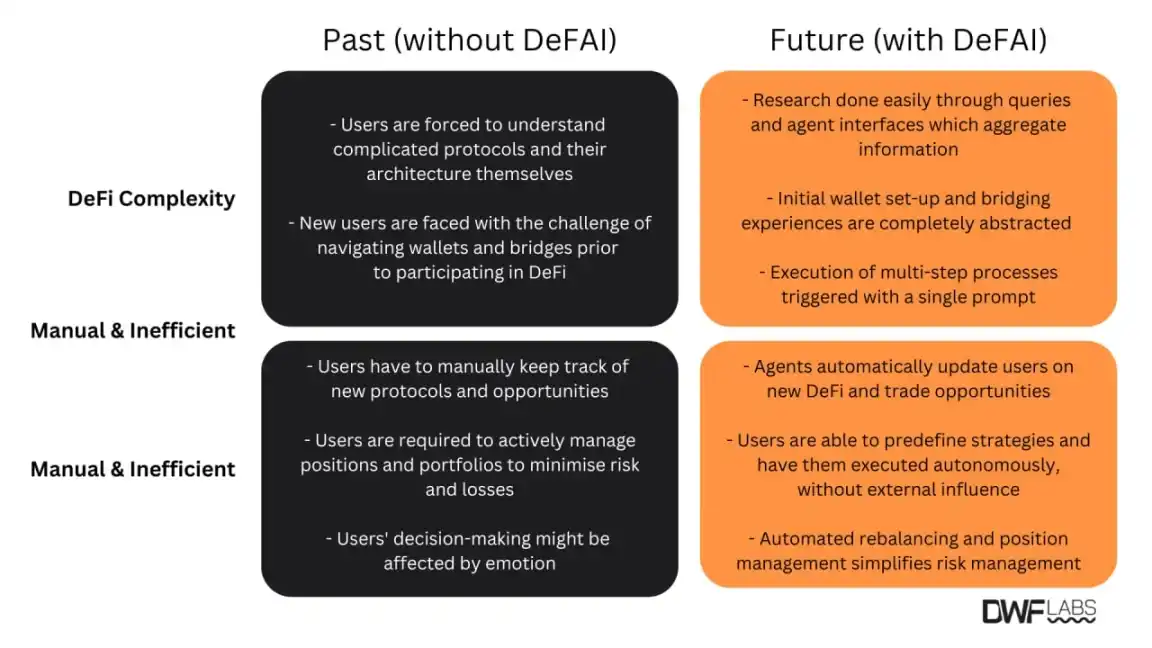
The Impact of DeFAI on DeFi. Source: DWF Labs
At its core, DeFAI represents the fusion of AI and DeFi, aiming to simplify and automate complex DeFi operations. In doing so, it provides users with an intuitive way to harness and participate in DeFi products, bridging the gap between existing solutions and a truly user-friendly experience.
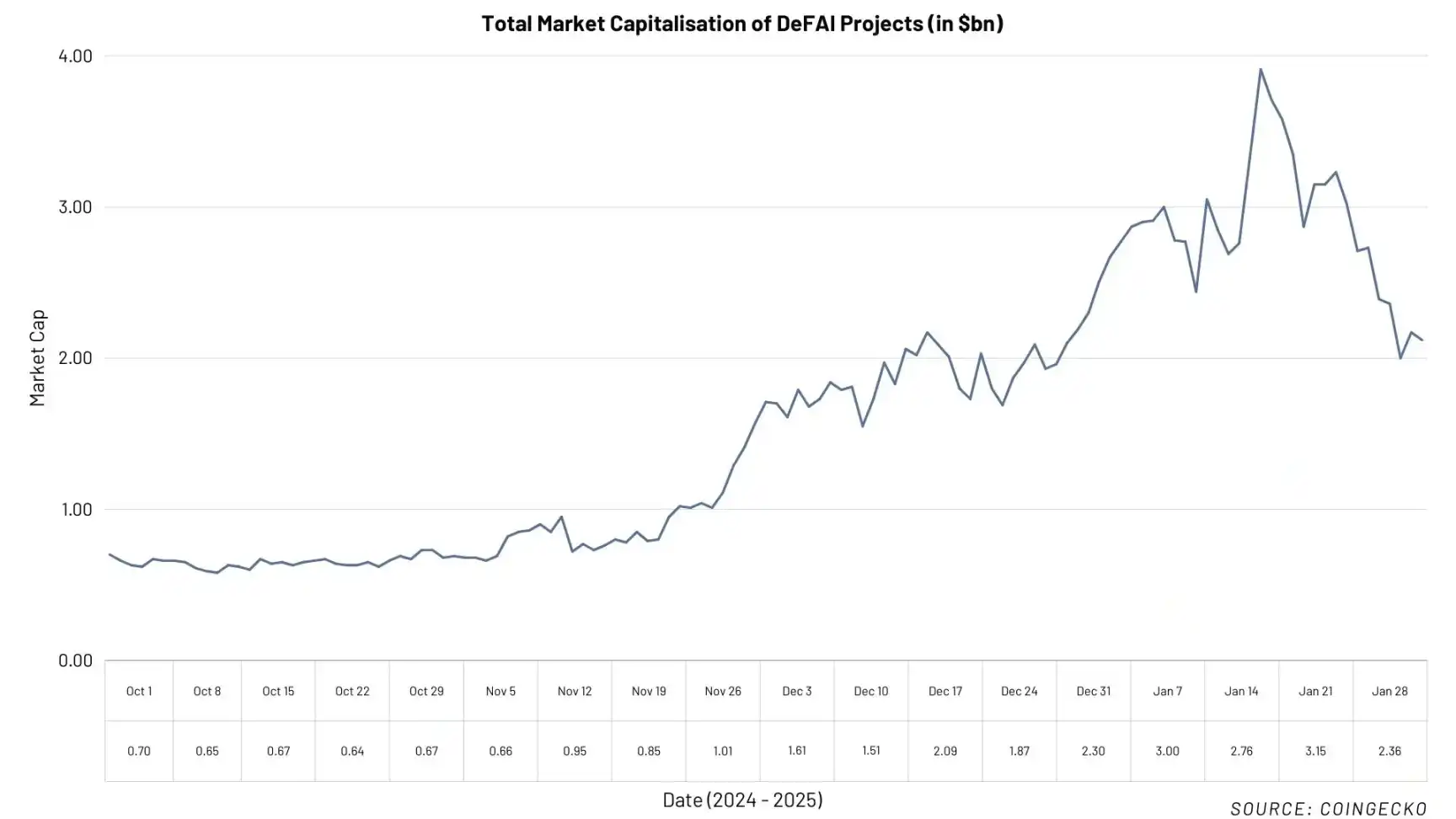
Total Market Value of DeFAI Projects. Source: CoinGecko
While DeFAI is still in its early stages, with many projects evolving and developing, its growth and future potential are undeniable. Although projects in this space will take time to reach their full potential, their ability to address some of the most pressing issues in DeFi and blockchain technology has already been demonstrated. DeFAI not only simplifies complexity or enhances user experience but also plays a key role in accelerating DeFi adoption, making it easier for both new and experienced users to interact with DeFi. In the future, we can expect DeFi to become more intuitive, efficient, and user-friendly, paving the way for deeper innovation and broader adoption.
Conclusion: The Cornerstone of the AI x Crypto World
In conclusion, while AI agents are currently undoubtedly in a speculative and volatile field, their reshaping of the crypto space, particularly towards DeFi, holds immense long-term potential. Like any emerging technology, the path forward is full of unknowns.
You may also like

Japan’s Three Megabanks Plan Joint Stablecoin Issuance in Fiscal 2026
MUFG, SMBC, and Mizuho reportedly plan to jointly issue fiat-pegged stablecoins in fiscal 2026, signaling Japan’s growing push into bank-led digital payment infrastructure.

Humanity Discloses H Token Dual-Chain Attack Details, With Losses on Ethereum and BSC Exceeding $36 Million
Humanity said the H token attack across Ethereum and BSC caused more than $36 million in losses after leaked ProxyAdmin keys enabled malicious contract upgrades and token minting.

White House Discusses CLARITY Act With Law Enforcement Ahead of Senate Vote
The White House discussed the CLARITY Act with law enforcement ahead of a Senate vote, focusing on illicit finance risks and developer protections.

$75 billion in foreign capital has fled, and South Korean retail investors have absorbed it all using leverage

Bitcoin Trading Guide 2026: Strategies for Experienced Traders

What Is XAUT and PAXG? Why Tokenized Gold Is Booming in 2026

Cryptocurrency CEXs are flocking to sell US stocks, and traditional brokerages are facing an "uninvited guest."

Will the SpaceX IPO Hurt Bitcoin? Here's What Traders Are Watching
Foreign selling in the South Korean stock market accelerates, with cumulative net sales reportedly reaching $75 billion this year
On June 9, The Kobeissi Letter, citing Goldman Sachs data, reported that global investors are selling South Korean stocks at an unusually rapid pace. In the latest trading session, foreign investors sold about $801 million worth of Kospi constituent stocks again; total foreign outflows last week reached about $10 billion, and the market has been in net foreign selling on nearly every trading day over the past month. According to the data cited in the report, foreign investors have sold about $75 billion worth of South Korean stocks so far this year. Meanwhile, South Korean retail and institutional investors together recorded roughly $69 billion in net buying over the same period, suggesting that the market’s main buying support has come from domestic capital rather than returning overseas funds. The information currently disclosed still mainly comes from The Kobeissi Letter’s retelling and Goldman Sachs data summaries, while public details on the statistical period and the specific definition of “selling” remain relatively limited.

Fortune Warns of Strategy’s Financing Structure Risks as Bitcoin Premium Narrows
Fortune warned that Strategy’s Bitcoin treasury model faces growing financing risks as MSTR’s net asset premium narrows and preferred stock dividend pressure increases.

Ferrari Challenge Le Mans: Carl Moon to Dominate in WEEX Livery

Sahara AI Responds to SAHARA’s Sharp Drop: No Contract or Product Security Issues Found, Internal Investigation Underway
Sahara AI responded to SAHARA’s 60% price drop, saying no token contract or product security issues have been found and an internal investigation is underway.

WEEX Deposit/Withdrawal Dynamic Island: Your Asset Status, Always in Sight
Scaling Crypto Derivatives: The Digital Asset Infrastructure Behind High-Volume Trading
In the fast-moving digital asset ecosystem, derivatives platforms face an extreme architectural test. High-leverage futures markets demand more than just standard security—they require absolute operational precision, zero-latency matching engines, and ironclad structural scalability, all while navigating intense market volatility.
As global platforms scale to meet these demands, the industry is shifting away from rigid, monolithic setups toward a more agile, "decoupled" infrastructure philosophy.
The Blueprint for High-Volume Copy TradingFor elite global exchanges like WEEX (founded in 2018), this architectural choice becomes critical when scaling high-volume retail features like social copy trading. When thousands of users automatically mirror the real-time strategies of elite traders simultaneously, it triggers sudden, monumental spikes in concurrent transactional volume.
To prevent execution latency or settlement bottlenecks during these peak volatility events, a platform's primary engine must remain entirely dedicated to risk management, copy-trade synchronization, and order matching.
The Architectural Rule: New-generation platforms must separate front-end user execution engines from heavy backend infrastructural overhead to eliminate operational friction.
By separating these layers, platforms can maintain complete sovereignty over their trading environments and user experiences while strategically aligning with institutional-grade infrastructure ecosystems. This strategic framework allows modern exchanges to leverage advanced Digital Asset Custody infrastructure such as Cobo’s behind the scenes, ensuring that backend wallet management scales elastically alongside trading spikes.
Capitalizing on Market Momentum and 400× LeverageIn a derivatives arena where platforms offer up to 400× leverage on perpetual contracts, capital efficiency and market agility are core business metrics. To capture market momentum, an exchange needs the ability to rapidly expand its asset offerings, supporting everything from legacy crypto assets to sudden, trending altcoins across a massive library of trading pairs.
Adopting a flexible, scalable Wallet-as-a-Service (WaaS) solution such as Cobo’s could completely rewrite the development timeline for high-growth exchanges. Instead of spending months of engineering capital building out custom backend wallet architectures for every new blockchain network, platforms can deploy localized infrastructure in days.
This agility allows platforms to instantly scale their listings to over a thousand trading pairs without compromising security or delaying time-to-market. It mirrors the exact operational advantages seen during high-velocity market events, similar to how advanced wallet infrastructure empowers platforms during sudden asset surges; allowing exchanges to pass that speed and liquidity directly to their global user base.
A Mature Foundation for GrowthThe synergy between trusted infrastructure ecosystems and global trading platforms represents the natural evolution of a maturing crypto market. As WEEX continues to scale its global spot and derivatives offerings for over 6 million users, adopting robust backend paradigms proves that platforms no longer have to compromise between cutting-edge trading velocity and uncompromised structural security.

Morning Report | BitMine increased its holdings by 126,971 ETH last week; trader Eugene announced his exit from the crypto market

Wang Chuan: How can one not feel anxious after the neighbor Old Wang made thirty times profit by investing in storage stocks? (Seven) - A quarter-century cycle

Get Paid to Onboard? Try WEEX’s New Homepage with Rewards for Registration, Deposit & Trade
WEEX Custom Layout: Build Your Perfect Trading Workspace in Seconds
Japan’s Three Megabanks Plan Joint Stablecoin Issuance in Fiscal 2026
MUFG, SMBC, and Mizuho reportedly plan to jointly issue fiat-pegged stablecoins in fiscal 2026, signaling Japan’s growing push into bank-led digital payment infrastructure.
Humanity Discloses H Token Dual-Chain Attack Details, With Losses on Ethereum and BSC Exceeding $36 Million
Humanity said the H token attack across Ethereum and BSC caused more than $36 million in losses after leaked ProxyAdmin keys enabled malicious contract upgrades and token minting.
White House Discusses CLARITY Act With Law Enforcement Ahead of Senate Vote
The White House discussed the CLARITY Act with law enforcement ahead of a Senate vote, focusing on illicit finance risks and developer protections.
$75 billion in foreign capital has fled, and South Korean retail investors have absorbed it all using leverage
Bitcoin Trading Guide 2026: Strategies for Experienced Traders
What Is XAUT and PAXG? Why Tokenized Gold Is Booming in 2026


