
Decoding DeFi 2025: Ten Key Insights from Consumer Finance to Technological Innovation

Original Article Title: "Decoding DeFi 2025: Ten Key Insights from Consumer Finance to Technological Innovation"
Original Article Author: Delphi Digital
Original Article Translation: Yuliya, PANews
As the market refocuses on utility value, Decentralized Finance (DeFi) is regaining momentum. From stablecoins to execution intent layers, innovation is entering the fast lane. Here are 10 key insights into the future development of DeFi.
1. Consumer-Grade DeFi Applications Are Coming
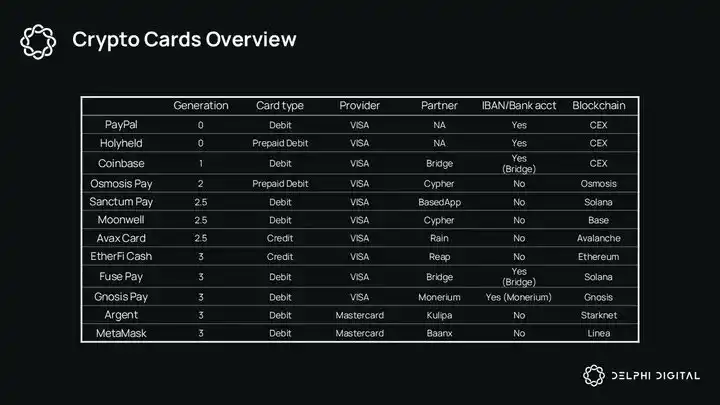
Crypto payment cards are evolving from simple withdrawal channels to self-custodial smart contract wallets that can interact directly with DeFi protocols. New types of crypto payment cards such as Gnosis Pay, Argent, and Fuse support programmable spending, automatic top-ups, and integration with lending protocols, bringing the vision of banking the unbanked closer to reality than ever before.
2. zkTLS Opens Up a New Frontier for DeFi
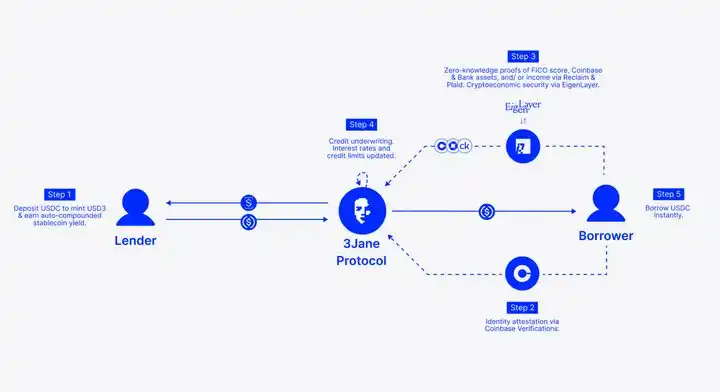
Zero-Knowledge Transport Layer Security (zkTLS) technology allows users to prove sensitive data on-chain without exposing private information. Projects like 3Jane (Credit Lending), Camp Network (Custom User Experience), and Showdown (Web2 Game) are leveraging zkTLS technology to expand DeFi into new markets. This could drive mainstream adoption of on-chain credit scoring, low-collateral loans, and other functionalities.
3. Yield-Sharing Stablecoins Reshape the Market Landscape
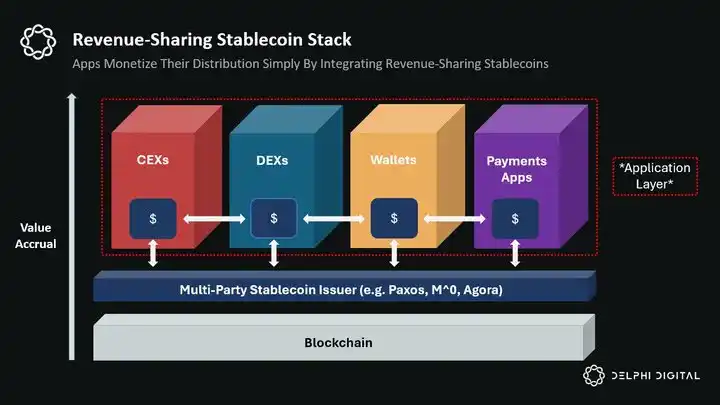
Stablecoin issuers earn significant income through reserve interest, and DeFi projects are disrupting this model. New types of stablecoins like M^0, Agora, and Paxos USDG share yield with applications, incentivizing wallets and DeFi platforms to integrate. This model could drive decentralized stablecoin issuance and reshape the competitive landscape by rewarding partner distribution rather than relying solely on network effects.
4. DeFi Value Shifts from Protocol Layer to Frontend
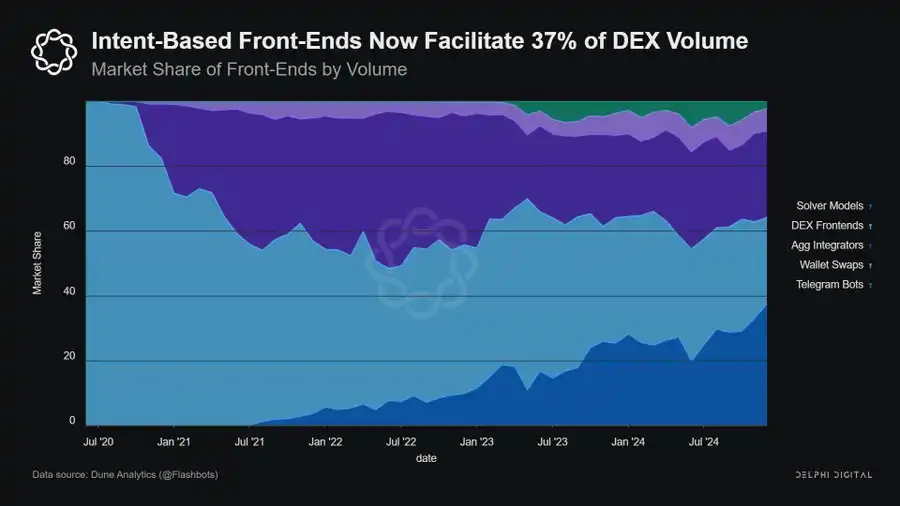
The value of DeFi protocols is shifting towards entities that control exclusive order flow, especially wallets and intent-driven frontends. Platforms like Jupiter and Phantom are laying the groundwork for order flow monetization, aiming to reshape the value distribution of DeFi. As the MEV supply chain matures, the competitive focus will shift from DEXs to the frontend, and distribution capability will become crucial for capturing value.
5. 2025: The Year of DEX Growth and Aggregator-Driven Trading
As DEX trading volumes rise and aggregators redefine execution methods, on-chain transactions are undergoing a significant transformation.
· Angstrom is dedicated to addressing MEV and LVR issues;
· Bunni v2 enhances passive liquidity strategies;
· Whetstone Research innovates token issuance mechanisms through Doppler.
6. Uniswap's Strategic Roadmap
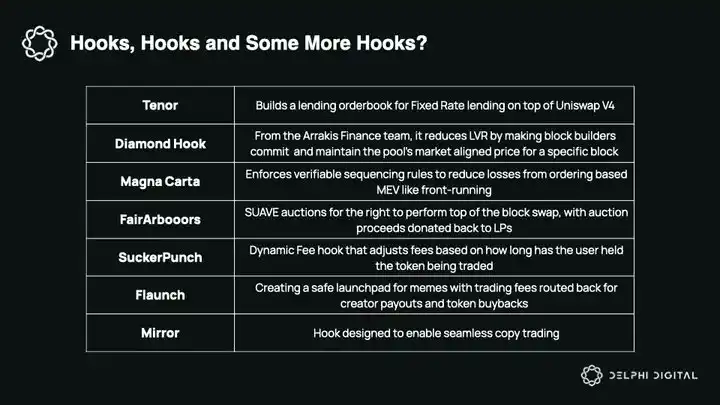
Uniswap is transitioning from a single DEX to DeFi's liquidity infrastructure:
· Uniswap Labs v4's Hooks feature supports AMM customization, automated LP management, and advanced order types;
· Unichain, as a blockchain specialized for DeFi, possesses high throughput and resistance to MEV;
· UniswapX is poised to become the primary intent execution layer in DeFi.
7. DeFi Transaction Paradigm Shift
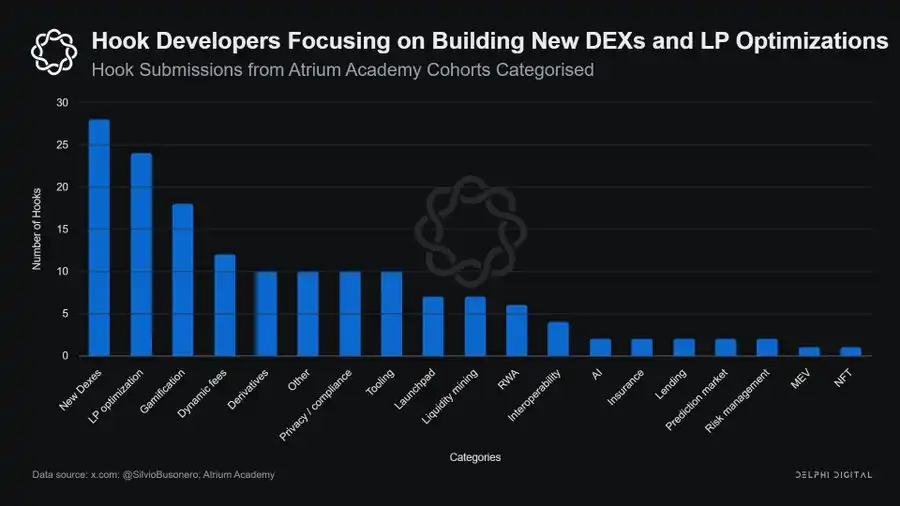
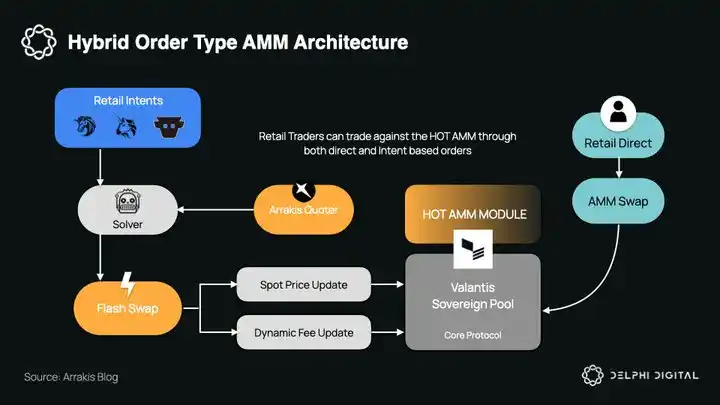
DeFi transactions are evolving towards modularity, intent-driven behavior, and high-speed execution. A new generation of DEX architectures is emerging to optimize liquidity, execution quality, and MEV protection:
· Valantis Labs offers a modular DEX framework supporting flexible exchange development;
· Arrakis Finance integrates OTC order flow via RFQ to shield LPs from MEV impact;
· Fluid utilizes "smart collateral" for leveraged liquidity provision and automated fee optimization;
· Order Book DEXs: High-performance blockchains like Monad, Sui, and Aptos are enabling efficient order book trading.
8. The Evolution of Prediction Markets
The prediction market is no longer just pure speculation, such as:
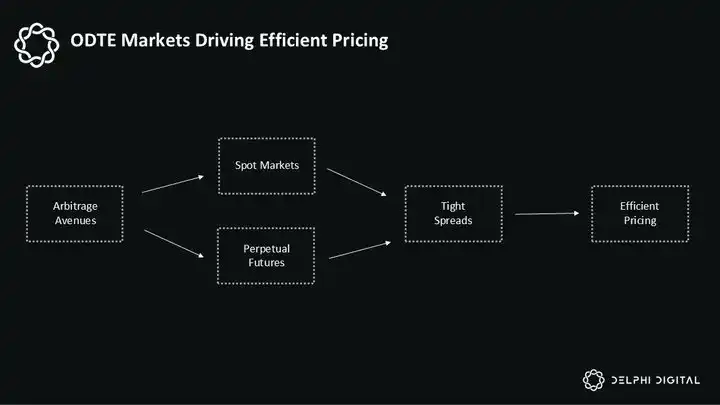
· The on-chain 0DTE derivatives launched by Limitless Exchange provide efficient pricing and leverage;
· Truemarkets ensures fair outcomes through its Truth Oracle+AI-driven validation and decentralized governance.
With the development of these patterns, the prediction market may become a core part of on-chain finance.
9. Development of Starknet
Despite facing challenges, Starknet's low-cost transactions, staking mechanism, and expanding ecosystem lay the foundation for its growth.
Key Catalysts:
· Bitcoin rollup may position Starknet as a leader in BTC Layer 2;
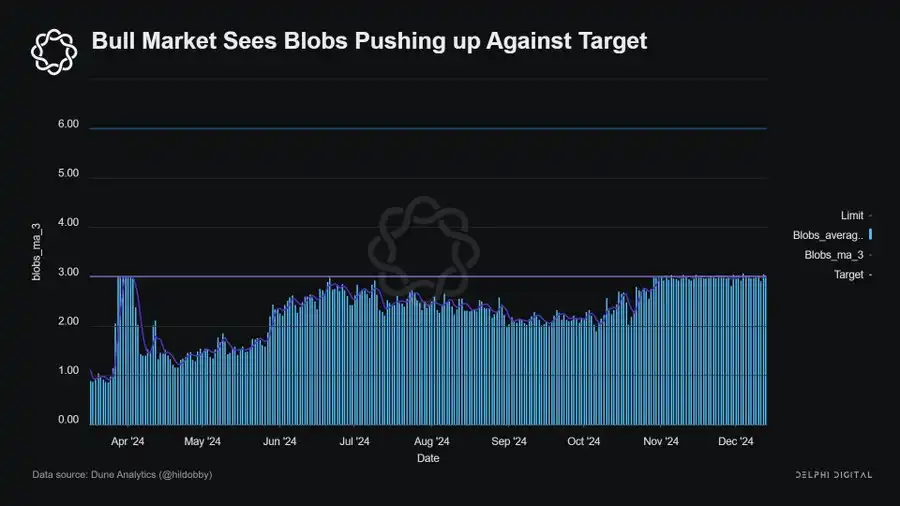
· Lower blob costs bring a scaling advantage relative to other L2 solutions;
· On-chain gaming is becoming a new adoption driver.
10. Challenges and Innovation
Despite the rapid development in the DeFi space, it still faces some key challenges.
· High entry barriers: Limited support from centralized exchanges forces users to rely on Ethereum cross-chain or intermediary services;
· Token incentives are insufficient: Many top protocols lack token or point systems, leading to low user engagement.
However, these challenges actually indicate that DeFi still has significant innovation space and development potential in the following areas:
· Low collateral loan products
· Lending aggregators
· Interest rate derivatives
· On-chain securitization protocols
· Advanced prediction markets
Looking ahead, the next wave of DeFi will focus on efficiency improvements, risk management, and the development of more advanced financial tools.
You may also like

Galaxy Deep Research Report: How Hyperliquid's HIP-4 Upgrade Changes the Landscape of Prediction Markets?

Binance Research: RWA Market Expected to Expand Nearly 6x from Early 2025, with Public Equities and Onchain Payments Heating Up Together
In June, Binance Research said in its monthly market report that the real-world asset (RWA) market is expected to grow by about 589% from the beginning of 2025. Bond- and money market fund-related RWA expanded by about $6.5 billion, up 83% year over year, while publicly traded equity RWAs grew by about 422%. The report also noted that monthly crypto debit card transaction volume exceeded $747 million in May, up 48.6% year to date.

Japan to Assess a Framework for Yen Stablecoins and Crypto ETFs as Asia’s Compliant Payments Narrative Heats Up
Recently, according to the original report, Japan is considering the launch of yen stablecoins and cryptocurrency ETFs. Public information remains limited at this stage, and there is still no complete policy text, regulatory draft, or clear implementation timeline, so this is better characterized as a “policy discussion” rather than formal implementation. The original wording also noted that advancing stablecoin regulation in Asia is driving XRP usage and supporting growth in the XRPL ecosystem. However, based on currently available public information, there is not enough evidence to directly establish a clear causal relationship between this round of discussion in Japan and XRP or XRPL.

ZachXBT: Humanity private key leak and abnormal surge in H token should be viewed separately
On June 9, according to related disclosures, on-chain investigator ZachXBT posted an update on Humanity’s roughly $31 million security incident, saying that after further analyzing fund flows, he currently tends to believe the project team was not involved in an “inside job” or a self-staged attack. According to him, the official explanation about the private key leak was broadly accurate, but before the token unlock, the price of H had been artificially pushed higher, and the hacker later took advantage of that market environment; therefore, the private key leak and the earlier abnormal price pumping should be regarded as two separate and independent events. This reframing has shifted the market’s understanding of the nature of the incident. Earlier discussion around Humanity had focused on whether the team directly participated in the attack or used the security incident to cover up internal operations. ZachXBT’s latest remarks shift the focus from “whether it was self-theft” to “whether there were pre-unlock market structure issues.” He also questioned whether the team may have.

Morning Report | OpenAI has submitted an S-1 registration statement draft to the U.S. SEC; Morpho completes $175 million financing

Morning Report | BitMine increased its holdings by 126,971 ETH last week; trader Eugene announced his exit from the crypto market

Wang Chuan: How can one not feel anxious after the neighbor Old Wang made thirty times profit by investing in storage stocks? (Seven) - A quarter-century cycle

Cryptocurrency CEXs are flocking to sell US stocks, and traditional brokerages are facing an "uninvited guest."
$75 billion in foreign capital has fled, and South Korean retail investors have absorbed it all using leverage

Japan’s Three Megabanks Plan Joint Stablecoin Issuance in Fiscal 2026
MUFG, SMBC, and Mizuho reportedly plan to jointly issue fiat-pegged stablecoins in fiscal 2026, signaling Japan’s growing push into bank-led digital payment infrastructure.

Humanity Discloses H Token Dual-Chain Attack Details, With Losses on Ethereum and BSC Exceeding $36 Million
Humanity said the H token attack across Ethereum and BSC caused more than $36 million in losses after leaked ProxyAdmin keys enabled malicious contract upgrades and token minting.
White House Discusses CLARITY Act With Law Enforcement Ahead of Senate Vote
The White House discussed the CLARITY Act with law enforcement ahead of a Senate vote, focusing on illicit finance risks and developer protections.

Bitcoin Trading Guide 2026: Strategies for Experienced Traders

What Is XAUT and PAXG? Why Tokenized Gold Is Booming in 2026

Will the SpaceX IPO Hurt Bitcoin? Here's What Traders Are Watching

Foreign selling in the South Korean stock market accelerates, with cumulative net sales reportedly reaching $75 billion this year
On June 9, The Kobeissi Letter, citing Goldman Sachs data, reported that global investors are selling South Korean stocks at an unusually rapid pace. In the latest trading session, foreign investors sold about $801 million worth of Kospi constituent stocks again; total foreign outflows last week reached about $10 billion, and the market has been in net foreign selling on nearly every trading day over the past month. According to the data cited in the report, foreign investors have sold about $75 billion worth of South Korean stocks so far this year. Meanwhile, South Korean retail and institutional investors together recorded roughly $69 billion in net buying over the same period, suggesting that the market’s main buying support has come from domestic capital rather than returning overseas funds. The information currently disclosed still mainly comes from The Kobeissi Letter’s retelling and Goldman Sachs data summaries, while public details on the statistical period and the specific definition of “selling” remain relatively limited.

Fortune Warns of Strategy’s Financing Structure Risks as Bitcoin Premium Narrows
Fortune warned that Strategy’s Bitcoin treasury model faces growing financing risks as MSTR’s net asset premium narrows and preferred stock dividend pressure increases.

Ferrari Challenge Le Mans: Carl Moon to Dominate in WEEX Livery
Galaxy Deep Research Report: How Hyperliquid's HIP-4 Upgrade Changes the Landscape of Prediction Markets?
Binance Research: RWA Market Expected to Expand Nearly 6x from Early 2025, with Public Equities and Onchain Payments Heating Up Together
In June, Binance Research said in its monthly market report that the real-world asset (RWA) market is expected to grow by about 589% from the beginning of 2025. Bond- and money market fund-related RWA expanded by about $6.5 billion, up 83% year over year, while publicly traded equity RWAs grew by about 422%. The report also noted that monthly crypto debit card transaction volume exceeded $747 million in May, up 48.6% year to date.
Japan to Assess a Framework for Yen Stablecoins and Crypto ETFs as Asia’s Compliant Payments Narrative Heats Up
Recently, according to the original report, Japan is considering the launch of yen stablecoins and cryptocurrency ETFs. Public information remains limited at this stage, and there is still no complete policy text, regulatory draft, or clear implementation timeline, so this is better characterized as a “policy discussion” rather than formal implementation. The original wording also noted that advancing stablecoin regulation in Asia is driving XRP usage and supporting growth in the XRPL ecosystem. However, based on currently available public information, there is not enough evidence to directly establish a clear causal relationship between this round of discussion in Japan and XRP or XRPL.
ZachXBT: Humanity private key leak and abnormal surge in H token should be viewed separately
On June 9, according to related disclosures, on-chain investigator ZachXBT posted an update on Humanity’s roughly $31 million security incident, saying that after further analyzing fund flows, he currently tends to believe the project team was not involved in an “inside job” or a self-staged attack. According to him, the official explanation about the private key leak was broadly accurate, but before the token unlock, the price of H had been artificially pushed higher, and the hacker later took advantage of that market environment; therefore, the private key leak and the earlier abnormal price pumping should be regarded as two separate and independent events. This reframing has shifted the market’s understanding of the nature of the incident. Earlier discussion around Humanity had focused on whether the team directly participated in the attack or used the security incident to cover up internal operations. ZachXBT’s latest remarks shift the focus from “whether it was self-theft” to “whether there were pre-unlock market structure issues.” He also questioned whether the team may have.
Morning Report | OpenAI has submitted an S-1 registration statement draft to the U.S. SEC; Morpho completes $175 million financing
Morning Report | BitMine increased its holdings by 126,971 ETH last week; trader Eugene announced his exit from the crypto market


